

Tim Cook did not inherit a weak company. He inherited a company that was already brilliant, but still heavily tied to a few products and to the aura of Steve Jobs. What Cook changed was the financial machine behind the product machine. Since Apple named him CEO in August 2011, he has overseen a business that now combines premium hardware, a massive services engine, global cash flow, disciplined capital allocation, and one of the strongest balance sheets in the world. Apple’s own leadership page says Cook arrived at the top job after serving as chief operating officer, where he ran worldwide sales and operations, including the company’s end-to-end supply chain. That background ended up shaping everything that followed.
Cook’s greatest achievement is easy to miss because it did not happen in one dramatic moment. He did not turn Apple into a financial giant by chasing headlines. He did it by tightening operations, widening revenue streams, turning software and services into a bigger share of the business, and treating shareholder returns as a permanent part of Apple’s strategy. The result is a company that posted $416.161 billion in fiscal 2025 revenue and $112.010 billion in net income, while also returning enormous sums to shareholders and keeping a huge pool of cash, marketable securities, and access to low-cost debt.
Table of Contents
Tim Cook’s Apple transformation, at a glance
| Year | Key move | Why it mattered financially | Source |
|---|---|---|---|
| 2011 | Apple named Tim Cook CEO after Steve Jobs resigned. | Cook began the era that would reshape Apple’s money model. | Reference Link: Apple Newsroom |
| 2012 | Apple launched its capital return program. | Apple started returning major amounts of cash to shareholders regularly. | Reference Link: Apple Newsroom |
| 2018 | Apple said it had returned $275 billion to shareholders since the program began, including $200 billion in buybacks. | The scale showed that Apple had become a cash machine, not just a product company. | Reference Link: Apple Newsroom |
| 2024 | Reuters reported Apple unveiled a record $110 billion buyback. | The company kept using cash returns as a core part of market trust. | Reference Link: Reuters |
| 2025 | Apple announced a new $100 billion share repurchase program and raised its quarterly dividend to $0.26 per share. | Cook’s Apple kept rewarding investors while still funding operations and innovation. | Reference Link: SEC |
| 2025 | Apple reported a fiscal year record of $416 billion in revenue and a September quarter record of $102.5 billion in revenue. | The financial engine stayed strong even in a tougher global environment. | Reference Link: Apple Newsroom |
Cook’s story starts with operations, but it quickly becomes a finance story. In Apple’s own words, he had already been responsible for worldwide sales, service, support, and supply chain management before becoming CEO. That matters because modern finance is not just accounting. It is logistics, timing, inventory, pricing, margin discipline, and the ability to move money across regions without losing control of the business. Cook understood the plumbing of Apple before he controlled the whole company. That is one reason he could build a more durable financial model than a lot of people expected.
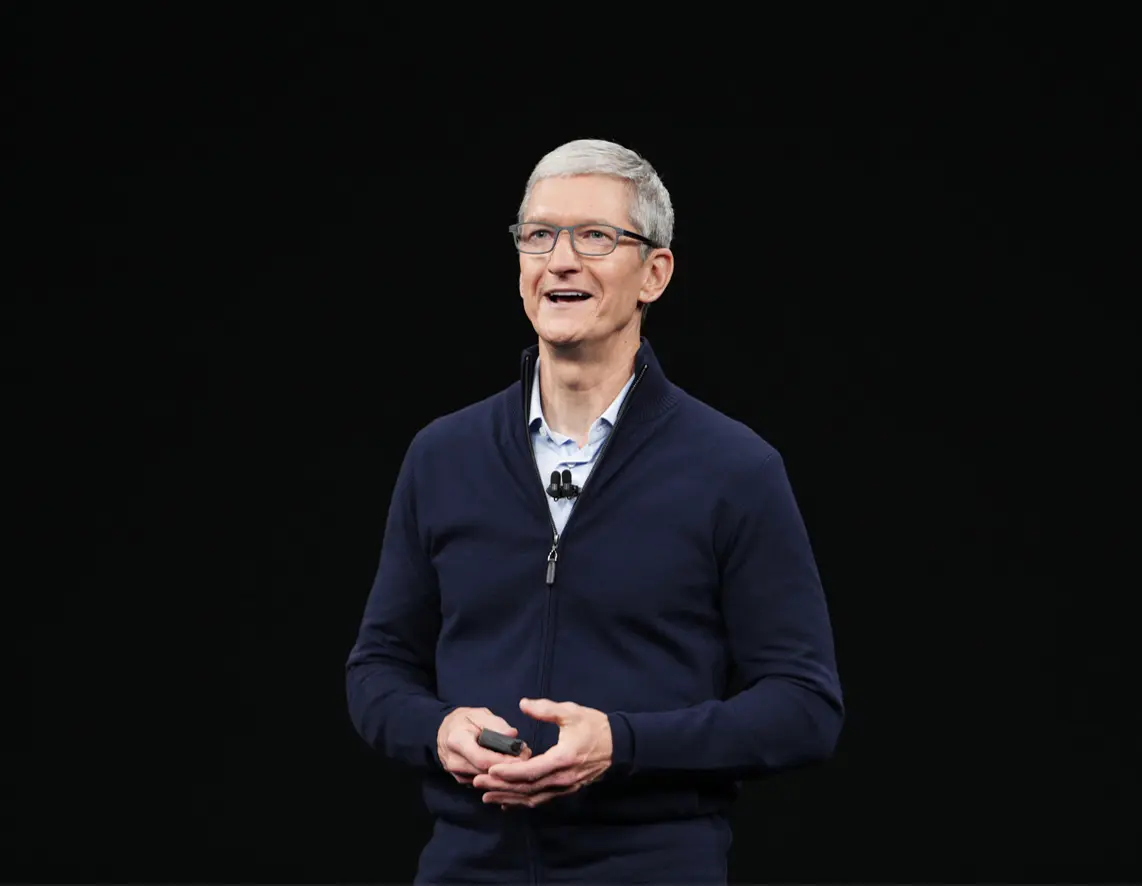
Why Apple’s financial model changed under Cook
The biggest shift was the rise of services. Apple’s fiscal 2025 10-K shows Services revenue of $109.158 billion, up 14% from the prior year. For the same year, iPhone revenue was $209.586 billion, Mac revenue was $33.708 billion, iPad revenue was $28.023 billion, and Wearables, Home and Accessories revenue was $35.686 billion. That means Apple is still a hardware company, but it is no longer only a hardware company. It now has a major recurring revenue layer that makes the business stronger and more predictable.
That services layer matters because it has better economics than hardware. In Apple’s first fiscal quarter of 2025, Services gross margin was 75.0%, while total company gross margin was 46.9%. The company also said Services grew because of higher revenue from advertising, the App Store, and cloud services. This is one of the clearest reasons Apple became a financial leader. It built a business line that is not only large but also highly profitable and increasingly tied to the installed base of Apple devices.
The best way to see this is to look at the wider ecosystem around Apple devices. An Analysis Group report, supported by Apple, estimated that the App Store ecosystem facilitated nearly $1.3 trillion in billings and sales worldwide in 2024. Of that total, $131 billion came from digital goods and services, $1.014 trillion from physical goods and services, and $150 billion from in-app advertising revenue. The report also said Apple collected no commission on more than 90% of that activity. In plain language, Apple is not just selling phones. It is sitting at the center of a giant commercial network.
What the services story really means
- App Store, Apple Music, Apple Pay, iCloud, and Apple TV+ all turn the device base into repeat business. Apple itself describes these as part of its six software platforms and service ecosystem.
- The installed base of active devices reached a new all-time high across all product categories and regions in Apple’s fiscal 2025 fourth quarter. That matters because a larger installed base usually means more service revenue over time.
- Apple said its September quarter set a new record for Services revenue, which is another sign that Cook’s model still keeps producing after the initial hardware sale.
One of the smartest parts of Cook’s strategy is that he did not force a false choice between hardware and services. He made them work together. Apple devices pull people into the ecosystem. The ecosystem then keeps those people inside Apple’s orbit for payments, storage, media, subscriptions, and app transactions. That is a cleaner and more stable revenue story than a business built only on annual device upgrades. It is also a story that investors understand very well because it looks a lot like recurring cash flow.
Apple’s 2025 financial snapshot
| Metric | FY2025 | FY2024 | Why it matters | Source |
|---|---|---|---|---|
| Total net sales | $416.161B | $391.035B | Shows Apple’s scale and growth. | Reference Link: SEC |
| Net income | $112.010B | $93.736B | Shows how much cash the business can turn into profit. | Reference Link: SEC |
| Services revenue | $109.158B | $96.169B | Shows the strength of Apple’s recurring revenue base. | Reference Link: SEC |
| iPhone revenue | $209.586B | $201.183B | iPhone still anchors the whole model. | Reference Link: SEC |
| Share repurchases | $89.3B | Noted in the filing | Apple keeps returning huge amounts of cash to shareholders. | Reference Link: SEC |
| Dividends and dividend equivalents | $15.4B | Noted in the filing | Apple now behaves like a mature cash generator. | Reference Link: SEC |
| Cash, cash equivalents, and marketable securities | $132.420B | $156.650B | Apple still has a massive liquidity cushion. | Reference Link: SEC |
| Total term debt | $90.678B | $96.662B | Apple uses debt strategically instead of relying only on cash. | Reference Link: SEC |
What this table says is simple. Cook built a company that prints money in a very controlled way. Apple still spends heavily on research, still sells expensive hardware, and still deals with supply chain pressure like any other giant global business. But it also produces enough profit and cash to support a giant capital return program, maintain liquidity, and keep debt at a level that is managed rather than scary. That is a finance leader’s balance sheet.
How Cook uses capital return as a strategy, not decoration
A lot of companies pay dividends or buy back shares because they have to. Apple does it because it can, and because it helps shape investor confidence. In 2025, Apple repurchased 402 million shares for $89.3 billion. It also paid $15.4 billion in dividends and dividend equivalents, and its board raised the quarterly dividend to $0.26 per share while approving a new $100 billion repurchase program in May 2025. That is not a side note. It is one of the defining parts of the Cook era.
Apple’s earlier capital return milestones show how long this discipline has lasted. By March 2018, Apple said it had already returned $275 billion to shareholders since the program began in August 2012, including $200 billion in repurchases. That level of return is rare even among the biggest corporations in the world. It tells you that Apple under Cook is not just making money, it is making money consistently enough to keep sending it back to owners year after year.
There is also a quiet intelligence in the way Apple handles its treasury. As of the fiscal 2025 year-end, Apple had $8.0 billion of commercial paper outstanding and $90.678 billion in total term debt. The company’s filing says it uses commercial paper proceeds for general corporate purposes, including dividends and share repurchases. That is the kind of detail that separates a flashy company from a financially sophisticated one. Apple is not hoarding cash in a way that makes capital inefficient. It is managing cash, debt, and payouts as one system.
Apple’s revenue by category in FY2025
| Category | FY2025 Revenue | Share of Total Revenue | What it tells us | Source |
|---|---|---|---|---|
| iPhone | $209.586B | Largest line item | Apple still depends on the iPhone, and that is not a weakness if the ecosystem stays strong. | Reference Link: SEC |
| Services | $109.158B | About a quarter of total revenue | Cook has built a huge recurring business on top of the device base. | Reference Link: SEC |
| Wearables, Home and Accessories | $35.686B | Meaningful support line | This keeps the ecosystem sticky and broad. | Reference Link: SEC |
| Mac | $33.708B | Solid enterprise and consumer business | Mac remains a profitable platform with room to breathe. | Reference Link: SEC |
| iPad | $28.023B | Stable category | iPad helps keep the ecosystem wide, not narrow. | Reference Link: SEC |
This is where Cook’s model becomes very clear. Apple is not trying to replace hardware with software. It is building a stack. The stack starts with iPhone, adds Mac, iPad, Wearables, and then pulls everything into Services. That is why the company can take a hit in one category and still remain strong overall. It also explains why Apple’s installed base matters so much. Each device sold is not just a one-time sale. It is the start of a long commercial relationship.
Apple’s global footprint under Cook
| Region | FY2025 Net Sales | Year-over-year change | What it shows | Source |
|---|---|---|---|---|
| Americas | $178.353B | +7% | Apple’s home market remains huge and still growing. | Reference Link: SEC |
| Europe | $111.032B | +10% | Europe is a major growth engine, especially for services, the iPhone, and Mac. | Reference Link: SEC |
| Greater China | $64.377B | -4% | China remains important, but it is no longer the only story. | Reference Link: SEC |
| Japan | $28.703B | +15% | Japan contributed to strong growth in iPhone, Services, and iPad. | Reference Link: SEC |
| Rest of Asia Pacific | $33.696B | +10% | Apple continues to broaden its reach across the region. | Reference Link: SEC |
Cook’s financial leadership also shows up in geography. Apple manages its business through the Americas, Europe, Greater China, Japan, and the Rest of the Asia Pacific. In fiscal 2025, four of those five regions grew. Only Greater China declined, and Apple’s filing says that drop was mainly due to lower iPhone sales, partly offset by stronger Mac sales. That matters because a global company must not rely too heavily on one region, even when that region is very important. Cook has spent years making sure Apple can still grow when one market slows.
That regional diversification is important for another reason. It gives Apple more ways to absorb shocks. Tariffs, currency swings, local competition, and political pressure all hit companies differently across markets. Reuters reported in 2025 that Apple was dealing with tariff pressure and was shifting more production to India and Vietnam, while also cutting its buyback program by $10 billion and flagging a $900 million tariff-related hit in one quarter. The bigger point is not the exact number. The bigger point is that Cook treats global risk as a financial problem, not just an operations problem.
The financial logic behind Cook’s Apple
Cook has made Apple a global finance leader by doing a few things very well, over and over again.
- He kept the hardware business premium, which preserves pricing power and protects margins.
- He turned Services into a giant, high-margin revenue stream.
- He used share repurchases and dividends as a long-term capital strategy, not a one-time gesture.
- He kept Apple’s treasury large, flexible, and globally managed, with both cash and debt in the mix.
- He expanded Apple’s economic footprint through the App Store and the wider device ecosystem.
This is why Apple feels different under Cook than it did under Jobs. Under Jobs, Apple was the world’s most famous product company. Under Cook, it became that and something else. It became a company with software subscriptions, app commerce, digital payments, cloud storage, a global services layer, and a capital return policy that rivals the biggest financial machines in corporate America. That is a much broader business than the one people first think about when they hear the word Apple.
The current numbers reinforce that point. In Apple’s fiscal 2025 fourth quarter, the company reported $102.5 billion in revenue, which was an all-time September quarter record, and said Services revenue hit a new all-time high. Apple also said fiscal 2025 revenue reached $416 billion and that its active device base reached a new all-time high across all product categories and geographic segments. That is what financial dominance looks like when it is tied to an ecosystem instead of a single product cycle.
What other companies can learn from Cook’s playbook
The most useful lesson here is not that every company should become Apple. That would be impossible. The lesson is that strong finance starts with strong systems.
First, operational excellence matters. Cook’s supply chain background gave him the instinct to care about inventory, vendors, timing, and global logistics. That sounds boring until you remember that great margins usually depend on boring discipline. Apple’s results show how much money a company can save and earn when operations are treated as a core strategic asset.
Second, recurring revenue is powerful. Apple’s Services business is not just big, it is sticky. It grows because people keep using their devices, keep storing data, keep buying apps, and keep subscribing to content and digital tools. That creates financial stability and makes forecasting easier. Businesses in every industry can learn from that, even if they are not selling phones.
Third, capital return is part of the strategy. Apple’s huge buybacks and dividends are not random gestures. They tell the market something important. They say the company believes in its own cash generation and wants to share that strength with owners. For public companies, that can be a sign of maturity, confidence, and discipline all at once.
Fourth, geographic balance matters more than ever. Apple still sells a massive amount in the Americas, but Europe, Japan, and Asia Pacific all play a real role in the growth story. The company’s 2025 results show how a global business can still grow even when one major region is under pressure. That is not luck. It is designed.
The bigger picture
Tim Cook turned Apple into a global finance leader by making the company less dependent on one kind of success. Apple still needs great products. It still needs the iPhone to matter. It still needs consumers to care about the next device launch. But under Cook, Apple also learned how to make money in more ways, in more places, and with more stability than before. That is why its financial story has lasted so long.
And maybe that is the cleanest way to describe his legacy. Cook did not simply preserve Apple. He made it more durable. He turned a product legend into a global cash engine, then used that engine to fund growth, reward shareholders, and protect the company from shocks that would have hurt a weaker business. The result is a company that is still admired for design, but now respected just as much for its financial discipline, capital allocation, and global scale.
If you look closely, Apple under Tim Cook is not one story. It is several stories working together. It is a hardware story. It is a services story. It is a supply chain story. It is a shareholder returns story. It is also a global risk management story. Put those together, and you get one of the most impressive financial transformations in modern corporate history.
Also, Read these Articles in Detail
- Tim Cook’s Leadership Strategy at Apple
- How Tim Cook Built Apple Into a Financial Powerhouse
- Tim Cook and Apple’s Corporate Strategy
- The Business Model Behind Apple’s Success Under Tim Cook
- Tim Cook’s Apple Playbook for Sustainable Profit Growth
Article’s References and Sources
- Apple Leadership: Tim Cook Profile
- Steve Jobs Resigns, Tim Cook Named CEO (2011 Announcement)
- Apple Reports Fourth Quarter Results (Fiscal 2025)
- Apple Global App Store Ecosystem Report (2025 PDF)
- Apple Reports Second Quarter Results (Capital Return Program Details)
- Apple Inc. Form 10-K Annual Report (Fiscal 2025)
- Apple Inc. Form 10-Q Quarterly Report (Q1 Fiscal 2025)
- Reuters: Apple Announces $110 Billion Share Buyback (2024)
- Reuters: Apple Navigates Tariffs and Global Supply Chain Shifts (2025)
Frequently Asked Questions
FAQ 1. How did Tim Cook turn Apple into a global finance leader?
Tim Cook turned Apple into a global finance leader by doing something very smart and very steady. He did not try to change the company with one dramatic move. Instead, he built a stronger financial system piece by piece. He kept the iPhone business powerful, but he also expanded Services, improved supply chain efficiency, and made capital return a core part of Apple’s financial identity. That meant Apple was no longer just a product company. It became a company with strong cash flow, huge profit margins, and a business model that could perform well in many different markets.
A big part of Cook’s success came from his background in operations. Before becoming CEO, he spent years working on Apple’s global supply chain, sales, and inventory management. That experience helped him understand how money moves through a business. He knew that strong finance is not only about revenue. It is also about reducing waste, keeping costs under control, and making sure the company can move quickly when the market changes. That kind of discipline helped Apple stay highly profitable even as it grew larger.
Cook also helped Apple create a more balanced business model. Under his leadership, Services became a huge revenue stream, bringing in money from the App Store, Apple Music, iCloud, Apple Pay, and other recurring offerings. This was important because it gave Apple a steadier source of income instead of depending only on device upgrades. When a company has recurring revenue, it becomes easier to plan, invest, and reward shareholders. That is one reason Apple is now seen as a global finance leader, not just a global tech brand.
Another major reason is Apple’s use of share buybacks and dividends. Cook made returning cash to shareholders a regular part of the company’s financial strategy. This showed confidence in Apple’s business and helped strengthen investor trust. At the same time, Apple kept a massive cash reserve and maintained access to debt in a careful, controlled way. That balance gave the company flexibility, strength, and resilience.
So, in simple terms, Tim Cook turned Apple into a global finance leader by combining operational discipline, high-margin services, global scale, and smart capital allocation. He made the company more predictable, more profitable, and more durable. That is what made his leadership so financially powerful.
FAQ 2. Why is Tim Cook considered such a strong financial leader?
Tim Cook is considered a strong financial leader because he understands that a great company needs more than popular products. It needs a reliable way to make money, protect margins, and grow over time. Cook has shown that skill again and again at Apple. He has kept the company highly profitable, expanded its recurring revenue base, and maintained one of the strongest balance sheets in the world.
One reason he stands out is his focus on long-term stability. Many leaders chase short-term growth and leave the business weaker later. Cook took the opposite path. He focused on building a company that could keep generating income year after year. That is why Apple’s financial performance has remained strong across different market conditions. Even when some product categories or regions slow down, the overall business stays healthy because the company has many revenue streams working together.
Cook is also very good at capital allocation. This means deciding how to use the company’s money in the smartest possible way. Apple has used billions of dollars for share repurchases, dividends, research and development, and operational needs. That kind of financial discipline matters because it shows the company is not wasting capital. It is using money with purpose. Investors usually respect that, and so do analysts.
Another reason Cook is respected is that he turned Apple’s ecosystem into a financial advantage. Every iPhone sold can lead to more spending on apps, subscriptions, storage, payments, and connected devices. That means one sale can lead to many more future transactions. This is a powerful business model because it creates loyalty and repeat revenue. A financial leader needs to understand not just how to sell once, but how to build a system that keeps producing value.
Cook is also strong because he manages risk carefully. Apple operates around the world, so it faces currency changes, supply chain pressure, tariffs, and regional competition. Cook has handled these challenges without losing control of the business. He treats global risk as part of financial strategy. That helps Apple stay steady even when the world gets messy.
FAQ 3. What role did the iPhone play in Apple’s financial growth under Tim Cook?
The iPhone played a huge role in Apple’s financial growth under Tim Cook. It remained the company’s biggest product and the main entry point into the Apple ecosystem. Even though Cook expanded the business into Services, Wearables, Mac, and iPad, the iPhone still acted like the center of gravity. It brought users into the ecosystem, and once they were inside, Apple had many ways to keep earning money from them.
The iPhone is important because it is not just a device. It is the front door to the whole Apple experience. When someone buys an iPhone, they are more likely to use iCloud, download apps from the App Store, subscribe to Apple Music, use Apple Pay, and buy accessories like AirPods or an Apple Watch. That is where the financial magic happens. A single hardware sale can create years of future spending. Tim Cook understood this and built Apple around it.
Under Cook, Apple also kept the iPhone premium. That matters because premium pricing supports strong gross margins. Apple does not compete by being the cheapest. It competes by being the most desirable, the most trusted, and the most integrated. That allows the company to protect profitability while still selling tens of millions of devices across the world. A strong pricing strategy is one of the most important parts of financial leadership.
The iPhone also helped Apple maintain global scale. In many countries, the iPhone is still a status symbol, a productivity tool, and a gateway into digital services. That broad appeal gives Apple an advantage in both mature and growing markets. Even when sales fluctuate in one region, the iPhone remains a powerful driver of revenue and brand strength.
So, while Tim Cook did not rely only on the iPhone, he used it as the foundation of a much larger financial system. The iPhone created the base, and the ecosystem turned that base into a much more profitable and durable business.
FAQ 4. Why did Apple’s Services business become so important under Tim Cook?
Apple’s Services business became important because it changed the quality of the company’s revenue. Before the growth of Services, Apple was more dependent on hardware sales. Hardware is valuable, but it can be affected by product cycles, upgrade timing, and consumer spending changes. Services gave Apple a more stable and recurring source of income. That made the company stronger financially and easier to predict.
Services include things like the App Store, iCloud, Apple Music, Apple TV+, Apple Pay, and other digital offerings. These products and platforms generate money again and again. That is very different from a one-time device sale. Once a customer joins the Apple ecosystem, they often keep paying for digital tools and subscriptions. That repeat behavior is exactly what makes the Services business so valuable.
Another reason Services matters is profitability. Services usually have much higher margins than hardware. That means Apple keeps more of each dollar it earns from Services than it does from some physical products. Higher margins help lift the company’s overall earnings and support shareholder returns. It also gives Apple more room to invest in future products and platforms.
Services also help Apple keep customers loyal. A person who stores photos in iCloud, pays with Apple Pay, listens to Apple Music, and buys apps from the App Store becomes deeply connected to the ecosystem. That makes switching to another platform harder. From a financial point of view, that loyalty is very important because it protects long-term revenue.
Tim Cook understood this shift early and pushed Apple to build the Services business into a major part of the company. That was a major reason Apple became such a powerful financial machine. It added depth, stability, and recurring income to a business that was once more tied to product launches alone.
FAQ 5. How did Tim Cook use capital returns to strengthen Apple’s financial image?
Tim Cook used capital return as a major part of Apple’s financial strategy. Capital return means giving money back to shareholders through share buybacks and dividends. Cook made this a regular and very visible part of Apple’s identity. That mattered because it showed that Apple was not only making money, it was making enough money to reward investors seriously.
Share buybacks became one of Apple’s signature financial moves. When a company buys back its own shares, it reduces the number of shares in the market. That can increase the value of the remaining shares over time, assuming the business stays strong. Apple used enormous buybacks to signal confidence in its own future and to support shareholder value. This is one reason investors have viewed the company as such a strong financial performer.
Dividends also play an important role. They give shareholders direct cash returns and show that the company is producing more money than it needs for day-to-day operations. Apple’s dividend policy under Cook made the company more appealing to both growth investors and income-focused investors. That widened Apple’s appeal in the market.
This strategy also improved Apple’s image as a mature and disciplined company. Some companies hold too much cash and do nothing with it. Others spend too aggressively and weaken their balance sheet. Apple took a balanced route. It kept large cash reserves, used debt carefully, and returned large amounts of capital to shareholders. That kind of financial structure gives confidence to the market and shows strong leadership.
In simple terms, Cook used capital return to tell investors that Apple was not just rich. It was financially disciplined, thoughtful, and built for the long term. That is a big part of why Apple is seen as a global finance leader today.
FAQ 6. How important was Apple’s global supply chain to its financial success under Tim Cook?
Apple’s global supply chain was extremely important to its financial success under Tim Cook. In fact, this may be one of the most underrated parts of his leadership. Before he became CEO, Cook spent years improving Apple’s operations, and that experience gave him a deep understanding of how supply chain efficiency affects profit, speed, and customer satisfaction.
A strong supply chain helps a company control costs, reduce waste, and keep products available when people want them. That sounds simple, but it is one of the hardest things to do at Apple’s scale. The company sells products all over the world. It depends on factories, suppliers, shipping routes, and local logistics across many countries. If that system breaks down, revenue suffers and costs rise. Cook knew how to manage that complexity better than most leaders could.
By keeping the supply chain efficient, Apple protected its gross margins. That meant the company could earn more profit from each product sold. It also helped Apple avoid serious delays, shortages, and inventory problems. When a company moves well, it can respond faster to demand and maintain customer satisfaction. That is good for revenue and even better for long-term brand strength.
The supply chain also helped Apple stay flexible in a changing world. When tariffs, trade issues, or regional disruptions appeared, Cook was able to adjust production and sourcing more effectively than many competitors. Apple’s later move to diversify manufacturing across places like India and Vietnam reflected that same strategic thinking. The company was not just reacting to risk. It was building a financial cushion through operational flexibility.
So yes, the supply chain was a financial tool, not just an operational detail. Cook used it to protect profits, support scale, and keep Apple’s business running smoothly around the world.
FAQ 7. What makes Apple’s balance sheet so strong under Tim Cook?
Apple’s balance sheet is strong because the company has a rare combination of huge cash generation, disciplined spending, and careful debt management. Under Tim Cook, Apple became one of the most financially stable companies in the world. It holds large amounts of cash and marketable securities, produces massive annual profit, and still uses debt in a very controlled way.
A strong balance sheet gives a company flexibility. It means Apple can invest in research and development, buy back shares, pay dividends, handle supply chain changes, and absorb economic shocks without putting the business at risk. That kind of strength is one reason investors trust Apple so much. They know the company is not living hand to mouth. It has room to move.
Cook also made sure Apple used capital efficiently. Instead of sitting on too much idle cash, the company returns money to shareholders while still keeping enough liquidity for operations and future needs. That balance is difficult to manage, but Apple has done it very well. It shows that Cook is not just focused on making money. He is focused on organizing money wisely.
Debt is also part of the story. Apple has strategically used debt, not because it is weak, but because borrowing can sometimes be a smart financial choice when managed carefully. The important thing is that the company keeps debt at a level that works for its business model. It does not use debt recklessly. That is another sign of financial maturity.
In simple terms, Apple’s balance sheet is strong because Cook built a company that earns a lot, spends carefully, and keeps its financial options open. That is one of the clearest signs of global financial leadership.
FAQ 8. How did Tim Cook help Apple become more than just a hardware company?
Tim Cook helped Apple become more than just a hardware company by turning the product lineup into an ecosystem. Under his leadership, Apple stopped being seen only as a maker of premium devices. It became a business that connects hardware, software, subscriptions, payments, storage, and services into one financial system.
This change matters because hardware alone can be unpredictable. People do not buy new phones every month. They upgrade on a cycle. That means a company relying only on devices can see uneven revenue. Cook solved that by adding more layers around the device experience. Every product now has a role in keeping the customer connected to Apple for longer.
For example, someone may buy an iPhone, then purchase AirPods, start paying for iCloud, subscribe to Apple Music, and use Apple Pay for everyday transactions. None of that would work without the hardware, but the real financial strength comes from the ongoing relationship after the sale. That is what transformed Apple into a more complete business.
Cook also encouraged Apple to think in terms of lifetime value. Instead of asking only how much revenue comes from one phone sale, the company now benefits from what that customer might spend over many years. That includes app purchases, media subscriptions, storage, and accessories. This kind of thinking is central to modern finance because it creates a more durable revenue model.
So Apple became more than a hardware company because Cook understood that a device is only the beginning. The ecosystem is where the long-term financial value really grows.
FAQ 9. How does Apple’s ecosystem support its financial power?
Apple’s ecosystem supports its financial power by keeping customers connected to the company across many different products and services. This is one of the smartest parts of Tim Cook’s leadership. The ecosystem creates convenience for users, but it also creates repeat revenue for Apple. That combination is powerful.
The ecosystem starts with Apple devices like iPhone, Mac, iPad, Apple Watch, and AirPods. But it does not stop there. It includes Services like iCloud, Apple Music, App Store, Apple Pay, and other subscriptions and digital tools. When customers use multiple Apple products, they become more likely to stay in the ecosystem and keep spending over time.
This matters financially because Apple is not just making one sale. It is building a long-term relationship. That relationship can last for years and can produce income across several categories. It also makes Apple more resilient because the company is not dependent on a single product line or a single transaction.
The ecosystem also helps Apple maintain pricing power. Customers often pay more for Apple products because they value the ease of use, design, and smooth integration between devices. That creates strong brand loyalty, which supports premium pricing and healthy margins. A company with strong pricing power is much better positioned financially than one that has to compete only on price.
Cook understood that the ecosystem was the key to turning Apple into a financial giant. Once customers are inside, Apple has many ways to create value and generate revenue. That is why the ecosystem is not just a product strategy. It is a financial strategy too.
FAQ 10. What is Tim Cook’s long-term legacy at Apple from a financial point of view?
Tim Cook’s long-term legacy at Apple, from a financial point of view, is that he turned a brilliant product company into a highly disciplined, globally powerful, and financially resilient business. He did not replace Apple’s creative side. He strengthened its business side. That is why his legacy is so important.
Cook’s biggest legacy is durability. He made Apple less dependent on one kind of success. The company still needs great products, but it also has a huge Services business, strong capital return policies, a powerful global supply chain, and deep financial reserves. That makes Apple far more stable than many other large companies in the world.
He also leaves behind a model of financial discipline. Apple under Cook does not waste capital. It does not chase growth without structure. It does not ignore shareholders. It keeps investing in innovation while also rewarding investors and protecting the balance sheet. That balance is hard to achieve, and Cook has done it for years.
Another part of his legacy is scale. Apple under Cook became one of the most valuable and financially admired companies in the world. It produces enormous annual revenue, massive net income, and huge returns to shareholders. That kind of scale is rare, and it did not happen by accident. It came from years of careful leadership and consistent execution.
So, when people look back at Cook’s time at Apple, they are likely to see more than a successful CEO. They will see a leader who changed the company’s financial foundation. He made Apple stronger, steadier, and more globally relevant. That is a legacy that goes far beyond product launches and headline numbers.
Article Disclaimer
The information presented in this article, “How Tim Cook Turned Apple Into a Global Finance Leader,” is intended for general informational and educational purposes only. While every effort has been made to ensure accuracy, the content reflects a broad interpretation of publicly available data, financial reports, and industry analysis related to Tim Cook and Apple Inc. It should not be considered definitive, complete, or guaranteed to be free from errors or omissions.
This article does not constitute financial advice, investment advice, or professional consulting of any kind. Any references to financial performance, revenue figures, share buybacks, dividends, or market strategy are provided for context and understanding only. Readers should not make financial or investment decisions based solely on the information provided here. It is always recommended to consult with a qualified financial advisor or professional before making any investment or business decisions.
The views and insights expressed in this article are based on analysis, interpretation, and publicly reported data. They may not reflect the official stance, strategy, or plans of Apple Inc. or its leadership. Business conditions, financial results, and corporate strategies can change over time, and past performance does not guarantee future outcomes.
Additionally, this article may include references to third-party data, reports, or news sources. While such sources are generally considered reliable, their accuracy and completeness cannot be fully guaranteed. Readers are encouraged to verify information independently where necessary.
By reading this content, you acknowledge that the author and publisher are not responsible for any actions taken based on the information provided. The material is offered “as is,” without warranties of any kind, either expressed or implied.
