

Key Milestones in Supersonic Travel
- 1947: The sound barrier is broken for the first time by Chuck Yeager in the Bell X-1, marking the dawn of supersonic flight and inspiring civilian applications.
- 1960s: International race begins with Anglo-French Concorde and Soviet Tu-144 projects, driven by Cold War competition and the allure of shrinking global distances.
- 1976: Commercial supersonic service launches with Concorde, halving transatlantic flight times but facing economic and environmental hurdles.
- 2003: Concorde retires amid rising costs and safety concerns, halting passenger supersonic travel for over two decades.
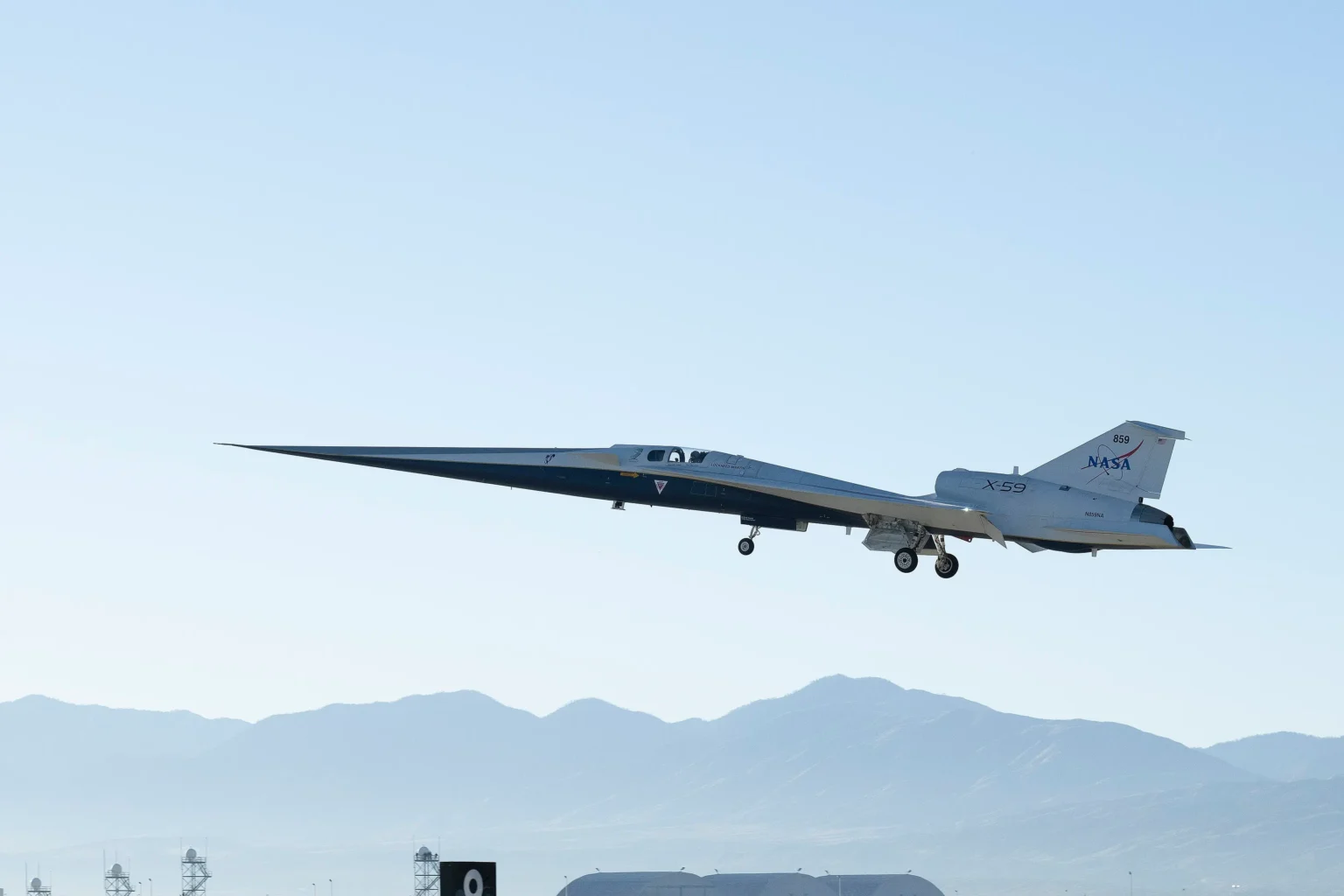
- 2020s: Revival with projects like Boom Overture and NASA’s X-59, focusing on quieter booms and sustainable fuels to make supersonic viable again.
Supersonic passenger jets promise to revolutionize air travel by slashing hours off long-haul flights, but their evolution has been a rollercoaster of breakthroughs, setbacks, and reinvention. From military experiments to glamorous icons like Concorde, these aircraft have grappled with physics-defying challenges like sonic booms and fuel guzzling. Today, innovations in aerodynamics and materials suggest a comeback, potentially allowing New York to London in under three hours by the end of the decade. Yet, environmental concerns loom large, demanding balanced progress.
Historical Foundations
The story starts in the post-World War II era, when aviation pioneers eyed speeds beyond sound—about 767 mph at sea level—for commercial use. Early jets like the de Havilland Comet pushed subsonic limits, but true supersonic dreams rooted in military needs, such as high-altitude reconnaissance.
Iconic Achievements
Concorde’s 1976 debut symbolized luxury and speed, carrying elites across oceans in style. Meanwhile, the Tu-144 beat it to the skies but faltered on reliability.
Persistent Hurdles
Key barriers include deafening sonic booms that rattled communities, engines that burned fuel like firehoses, and tickets pricier than diamonds. These forced overland bans and early retirements.
Emerging Horizons
Companies like Boom Supersonic aim for 2029 service with efficient designs, while NASA’s X-59 tests boom-quieting tech. Sustainable aviation fuel could green the skies, but scaling remains the test.
Table of Contents
Imagine boarding a plane in New York at dawn and sipping coffee in London by breakfast. That’s the tantalizing promise of supersonic passenger jets—aircraft that zip through the skies faster than sound, turning 7-hour flights into 3.5-hour jaunts. For decades, this vision has captivated engineers, pilots, and travelers alike, blending cutting-edge science with the raw thrill of speed. Yet, the road to making it routine has been anything but smooth. From groundbreaking military tests to the glamorous but troubled reign of the Concorde, and now to a hopeful revival powered by quiet innovations, the evolution of these marvels reflects humanity’s relentless push against the limits of physics and economics.
This journey isn’t just about raw velocity; it’s a tale of ambition clashing with reality. Early dreamers saw supersonic travel as the ultimate democratizer of distance, but harsh truths like thunderous sonic booms, voracious fuel appetites, and sky-high costs grounded the dream. Today, as climate awareness grows, new players are rewriting the script with sleeker designs and greener fuels. Let’s dive into this high-flying saga, exploring the milestones, missteps, and horizons ahead.
Roots in the Sound Barrier: The Military Spark
The supersonic era didn’t burst onto the civilian scene out of nowhere. It ignited in the smoky aftermath of World War II, when aviation was still shaking off propeller-driven shackles. By the late 1940s, engineers were obsessed with piercing the sound barrier—that invisible wall where air compresses into shockwaves, making speeds above Mach 1 (the speed of sound) feel like punching through molasses.
The pivotal moment came on October 14, 1947, when test pilot Chuck Yeager strapped into the sleek Bell X-1, a rocket-powered bullet shaped like a .50-caliber round. Dropped from a B-29 bomber at 35,000 feet, Yeager rocketed to Mach 1.06, shattering the barrier with a boom that echoed across the Mojave Desert. This wasn’t just a stunt; it proved supersonic flight was survivable, opening floodgates for military jets like the F-86 Sabre in the Korean War.
But why pivot to passengers? Post-war prosperity fueled wanderlust, and airlines craved faster routes to feed booming global trade. Visionaries at Britain’s Ministry of Supply and France’s Sud Aviation began sketching airliners that could cruise at Mach 2—twice the speed of sound. Across the Iron Curtain, Soviet designers at Tupolev smelled opportunity, turning Cold War rivalry into a supersonic arms race. These early concepts borrowed heavily from fighters: delta wings for stability, afterburning engines for thrust, and materials like heat-resistant titanium to withstand skin-frying friction.
Key Inspirations from Military Tech:
- Swept-back wings: Reduced drag at high speeds, tested on bombers like the English Electric Canberra.
- Area rule: A fuselage “wasp waist” to minimize wave drag, pioneered by Richard Whitcomb at NASA’s precursor, NACA.
- Ejector seats and pressurized cabins: Ensured safety amid the stresses of acceleration.
By the mid-1950s, feasibility studies bloomed. A 1956 British report predicted 500 supersonic airliners by 1970, zipping London to New York in 3 hours. Little did they know, the real hurdles lay not in speed, but in sustaining it affordably.
The Anglo-French Gamble: Birth of the Concorde
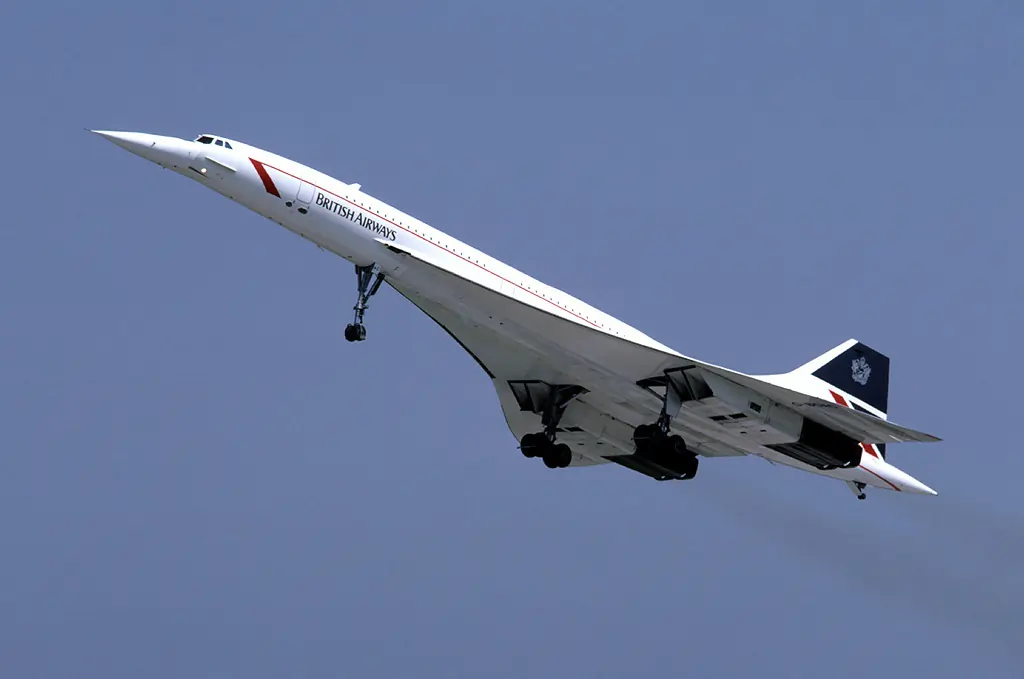
Enter the Concorde, the undisputed star of supersonic lore. Born from a bold 1962 treaty between Britain and France, this joint venture pooled resources to outpace American efforts like Boeing’s aborted SST. Sud Aviation and the British Aircraft Corporation hammered out a design: an ogive delta wing, four Olympus 593 turbojets, and a droop-nose cockpit for landing visibility. The goal? Mach 2.04 cruises at 60,000 feet, with room for 100 passengers in club-class luxury.
Development kicked off in earnest in 1964, with prototypes rolling out by 1967. The first flight, on March 2, 1969, from Toulouse saw the Concorde 001 leap skyward, its afterburners roaring like thunder. Pilots reported a smooth ride, but ground crews sweated over the £1.5 billion (about $20 billion today) price tag, split between governments.
Testing was grueling: 5,000 hours of flights probed everything from engine icing to structural fatigue. By 1973, it notched its first supersonic dash, clocking Mach 1.7 over the Atlantic. Commercial dreams soared when British Airways and Air France signed on, betting on prestige to offset costs.
Here’s a detailed timeline of Concorde’s ascent:
| Year | Milestone | Details |
|---|---|---|
| 1956 | Committee Forms | UK’s Supersonic Transport Aircraft Committee greenlights studies for a 150-passenger SST. |
| 1962 | Treaty Signed | Britain and France commit £210 million each for development. |
| 1965 | Construction Begins | Six prototypes under build; wind-tunnel tests refine delta wing. |
| 1969 | Maiden Flight | Concorde 001 flies subsonically from Toulouse; public awe grows. |
| 1971 | Supersonic Debut | Reaches Mach 1.7; structural tests confirm airframe integrity. |
| 1973 | Transatlantic Crossing | First non-stop supersonic hop from Washington to Paris in 3 hours 33 minutes. |
| 1976 | Service Launch | British Airways Flight 1 from Heathrow to Bahrain; fares start at $7,000 round-trip (adjusted). |
| 1979 | Safety Scare | Near-miss incident prompts engine upgrades. |
| 1990s | Peak Operations | Up to 14 daily flights; celebrities like Elton John flock aboard. |
| 2000 | Fatal Crash | Air France Flight 4590 crashes in Paris, killing 113; fleet grounded for mods. |
| 2003 | Final Bow | Last flight on October 24; 27 years of service, 2.5 million passengers flown. |
The Concorde wasn’t flawless—its takeoff roar shattered windows miles away—but it delivered magic. Passengers dined on caviar amid champagne sunrises, watching the curvature of Earth unfold. Over 50 aircraft crisscrossed oceans, proving supersonic wasn’t sci-fi.
The Red Rival: Tupolev Tu-144’s Bold Bid
While Western Europe waltzed with elegance, the Soviet Union charged ahead with brute force. The Tupolev Tu-144, nicknamed “Concordski” by skeptics, was Moscow’s riposte to capitalist flair. Designed by Andrey Tupolev and son Alexey, it debuted earlier, flying on December 31, 1968—two months before Concorde—from Zhukovsky Airfield.
Bigger and bolder, the Tu-144 stretched 65 meters long, with canards for lift and NK-144 engines pushing Mach 2.15. It carried 140 passengers, outseating its rival, and hit Mach 2 first in June 1969. Soviet leaders touted it as a propaganda win, parading it at the 1973 Paris Air Show where tragedy struck: mid-air breakup killed crew and onlookers, blamed on a test maneuver gone wrong.
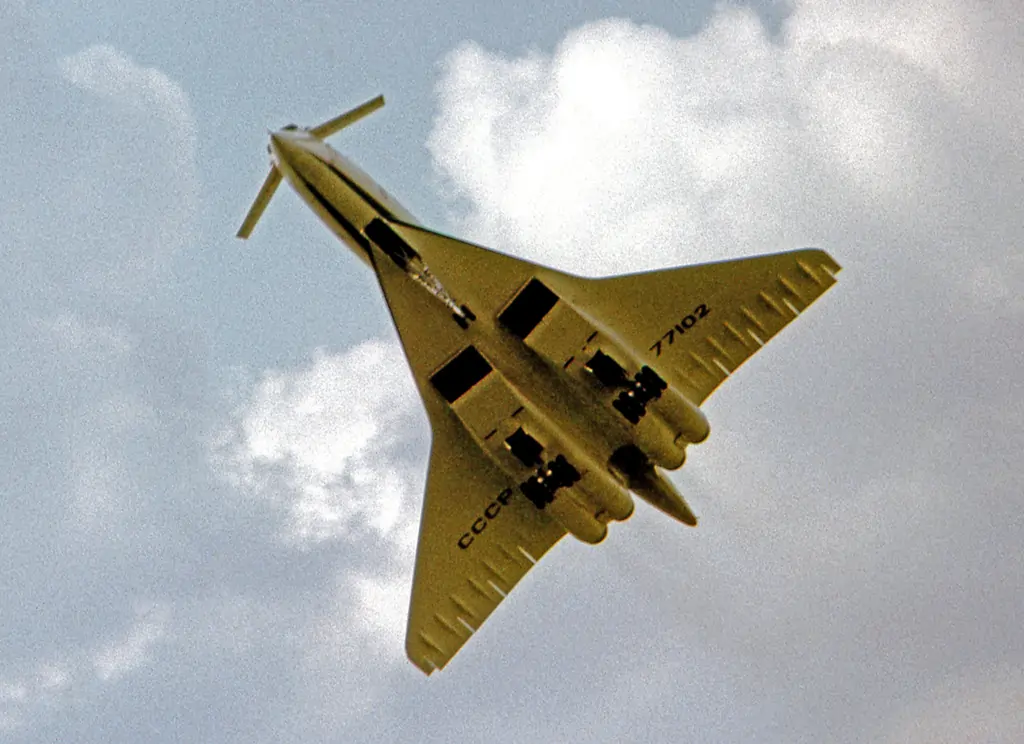
Service limped in 1977 on the Moscow-Almaty route, but woes mounted. Cracks in the fuselage, engine fires, and a 1978 crash sidelined it after mere 55 passenger flights. By 1978, it was cargo-only, retiring in 1983 amid fuel shortages and design flaws like excessive weight.
Tu-144 vs. Concorde: A Head-to-Head Snapshot:
- First Flight: Tu-144 (1968) edges Concorde (1969), but reliability favors the latter.
- Top Speed: Tu-144 at Mach 2.15 vs. Concorde’s Mach 2.04—Soviet edge in velocity.
- Passenger Capacity: 140 for Tu-144; 100 for Concorde, prioritizing Soviet volume.
- Service Years: Tu-144 (1977-1983, sporadic); Concorde (1976-2003, robust).
- Fatal Incidents: Both suffered—one for each—highlighting shared risks.
The Tu-144‘s fall exposed rushed engineering, yet it logged valuable data, later aiding NASA’s high-speed research.
Grounded by Reality: The Inescapable Challenges
For all their glamour, supersonic jets hit turbulence that no wing could outfly. The sonic boom—a pressure wave hitting like distant thunder—drove the nail in first. At Mach 1+, aircraft generate cones of compressed air, rattling windows and spooking livestock. U.S. bans overland supersonic flight in 1973 doomed routes like Tokyo to Los Angeles, confining ops to oceans.
Fuel efficiency fared worse. Cruising supersonic demands 4-5 times the kerosene of subsonic jets, thanks to exponential drag. A Concorde guzzled 25,000 liters per hour, versus a Boeing 747’s 12,000, spiking tickets to $12,000 one-way and emissions to black-hole levels. Noise was another beast: takeoff decibels hit 120—louder than a rock concert—forcing curfews at hubs like JFK.
Economics sealed the fate. Post-1973 oil crisis, carriers balked at £46 million per plane. The 2000 Air France crash, sparked by tire debris, grounded the fleet for a year, eroding confidence. By retirement, Concorde flew at 50% capacity, a luxury relic in a democratized sky.
| Challenge | Description | Impact on Early SSTs | Modern Mitigation Efforts |
|---|---|---|---|
| Sonic Boom | Shockwave from exceeding sound speed, perceived as explosive noise on ground. | Banned overland flights; limited routes to transoceanic. | Shaped fuselages (e.g., X-59’s needle-nose) reduce to “thump” at 75 decibels. |
| Fuel Consumption | Drag surges quadratically; afterburners burn extra. | Concorde used 17% more fuel per passenger-mile than subs. | Sustainable aviation fuels (SAF) and variable-cycle engines cut 50% emissions. |
| Engine Noise | High-bypass turbofans roar at takeoff. | Airport restrictions; community backlash. | Chevrons and acoustic liners drop noise by 10-15 decibels. |
| Thermal Stress | Skin heats to 127°C at Mach 2. | Required exotic alloys; added weight/cost. | Composites like carbon fiber withstand heat without penalty. |
| Economics | High build/ops costs; low load factors. | Only 20 Concordes built vs. 350 forecast. | Smaller fleets (65-80 seats) and premium pricing aim for viability. |
These thorns didn’t kill the dream—they pruned it, forcing a rethink.
Revival in the Skies: Today’s Trailblazers
Fast-forward to the 2020s, and supersonic stirs anew, buoyed by composites, AI simulations, and eco-mandates. Leading the charge is Boom Supersonic, a Denver upstart unveiling the Overture in 2021. Slated for 2029 entry, this 65-seater cruises Mach 1.7 on SAF, promising New York-London in 3.5 hours. Backed by United Airlines’ 15-plane order, it sports folding wings for gate fit and efficiency tweaks slashing fuel 20% below Concorde.
NASA’s X-59 QueSST steals the quiet show. Unveiled in 2022, this “quiet supersonic” spear cruises Mach 1.4 with a 140-foot needle fuselage diffusing booms to a soft thump. First flight in October 2025 from Lockheed’s Palmdale plant validated subsonic handling; supersonic tests loom in 2026. Data will lobby regulators for overland approval, unlocking domestic hops like LA to Tokyo.
Other contenders dot the horizon:
- Spike Aerospace’s S-512: A business jet for 18 execs at Mach 1.6, emphasizing windowless cabins with wraparound screens.
- Aerion AS2: Defunct but influential, it pushed composite airframes before folding in 2021.
- Hypersonic whispers: Hermeus eyes Mach 5 by 2030, but passenger viability lags.
These aren’t relics; they’re evolutions, learning from Concorde‘s ledger.
Engineering Marvels: Tech That’s Turbocharging the Comeback
What makes round two feasible? A cocktail of wizardry. Computational fluid dynamics (CFD) lets designers simulate booms virtually, slashing wind-tunnel costs 90%. Variable geometry inlets adjust engine air for seamless sub-to-supersonic shifts, boosting efficiency 15%.
Materials shine brightest: Carbon-fiber reinforced polymers halve weight while shrugging off 200°C heat, unlike Concorde‘s titanium guzzler. Engines evolve too—adaptive cycle turbofans from GE and Rolls-Royce sip less fuel by recycling exhaust.
Sustainability seals the deal. Sustainable aviation fuel (SAF) from waste oils could cut lifecycle CO2 80%, per IATA. Electrification hybrids loom, though batteries balk at range. Noise? Laminated nacelles muffle roars, aiming for airport compliance.
Breakthrough Examples:
- Boom’s Symmetry: Identical engines front and back balance thrust, easing certification.
- X-59’s Boom Shaping: Elongated nose spreads shockwaves, mimicking ocean swells overland.
- AI Optimization: Machine learning refines winglets, saving 5% drag per iteration.
These tools don’t just fix flaws—they reimagine flight.
Gazing Ahead: Supersonic’s Next Chapter
By 2030, analysts forecast 500 supersonic jets aloft, ferrying 200,000 passengers daily. Routes? Transpacific sprints, Europe-Africa dashes, even intra-U.S. if bans lift. Boom eyes 600 city pairs; NASA predicts land approvals by 2027 if X-59 thumps softly.
But shadows linger. Climate hawks decry doubled CO2—Overture might emit 2-3 times a 787’s per seat. Regulators demand zero-boom proofs; insurers eye liability spikes. Equity matters too: Will supersonic stay elite, or trickle to masses?
Optimists counter with offsets: Faster flights mean fewer planes, netting emission drops. Hybrids and hydrogen could zero-impact by 2040. As Boom CEO Blake Scholl quips, “We’re not repeating history—we’re upgrading it.”
In essence, supersonic’s evolution mirrors aviation itself: Bold leaps, hard lessons, brighter tomorrows. Whether Overture echoes Concorde‘s glory or charts new paths, one thing’s certain—the sky’s no longer the limit; it’s the launchpad.
Key Citations And References
- Supersonic flight | Commercial Air Travel, Mach 1 & Mach 2
- The past, present, and future of supersonic air travel
- Supersonic transport – Wikipedia
- Supersonic Transport The First Generation – SFO Museum
- Research in Supersonic Flight and the Breaking of the Sound Barrier
- Dawn of a new supersonic era – AEROREPORT
- The Return of Supersonic Air Travel? | PBS North Carolina
- Supersonic Milestones: From the Bell X-1 to the Modern Jets – AVI-8
- Concorde: The story of supersonic passenger flight
- Tupolev Tu-144 – Wikipedia
- Tupolev Tu-144 | Supersonic, Airliner, Prototype | Britannica
- The Tu-144LL: A Supersonic Flying Laboratory – NASA Facts
- Tupolev Tu-144: The Story Of The Soviet Supersonic Concorde
- Tupolev Tu-144 – Aircraft Factsheets – AviaMagazine.com
- HISTORY : TIMELINE 60’s – TU-144 SST
- Concorde timeline – Brooklands Museum
- Concorde – Wikipedia
- Concorde chronology – The History Press
- TIMELINE -70’s – CONCORDE SST
- Concorde | Summary, History, & Facts – Britannica
- Concorde timeline: The highs and lows of the iconic plane
- Concorde’s history — Aerospace Bristol
- How the Concorde Was Developed and Tested – Dewesoft
- The Rise & Fall Of Concorde – Simple Flying
- Concorde operational history – Wikipedia
- X-59 | Lockheed Martin
- Quesst – NASA
- Boom – Supersonic Passenger Airplanes
- Lockheed Martin X-59 Quesst – Wikipedia
- NASA’s ultraquiet supersonic ‘flying swordfish’ makes history with first test flight
- NASA’s Quiet Supersonic Jet Takes Flight – WIRED
- Supersonic Flight – NASA
- NASA X–59 makes first (subsonic) flight – AOPA
- America’s skies may soon open up to supersonic travel. But there’s a big problem
- FlyBy – The Revival of Supersonic Travel – Boom
- A return to supersonic commercial aviation | World Finance
- NASA expects supersonic passenger flights by 2026
- Supersonic travel: Dead on arrival? – Aerospace America – AIAA
- Leading The World in Supersonic Flight – The White House
- Supersonic planes are inching toward takeoff. That could be a climate problem
- The Biggest Hurdles to Reintroducing Supersonic Flight
- Supersonic travel: Dead on arrival? – Aerospace America – AIAA
- Supersonic aircraft: Twice as nice, or double the trouble?
- The Future of Supersonic Travel: Challenges and Opportunities
- What is the primary obstacle in achieving economically feasible supersonic flight
- The Problems with Supersonic Flight – JSTOR Daily
- Supersonic planes are inching toward takeoff. That could be a climate problem
Read These Articles in Detail
- Momentum Transfer Tethers: Revolutionizing Space Launches from Low Earth Orbit
- Momentum Transfer Tethers: Tip Mass Challenges and Material Innovations for Space Launches
- Momentum Transfer Tethers: Precision Bolo Rendezvous and Payload Capture
- Orbital Dynamics of Space Tethers in LEO: Aerospinning, Drag and Stabilization
- Momentum Exchange Systems with High-Strength Space Tethers
- Momentum Transfer Tethers: Transforming Satellite Constellations
- Top 10 Emerging Aerospace Technologies Transforming the Industry
- The Future of Hypersonic Flight: Challenges and Opportunities
- How AI Is Revolutionizing Aerospace Engineering
- Additive Manufacturing in Aerospace: 3D Printing the Future of Flight
- The Rise of Electric Aircraft: Are We Ready for Zero-Emission Aviation?
- Aerospace Materials of Tomorrow: From Composites to Nanotechnology
- Digital Twins in Aerospace: Reducing Costs and Improving Safety
- The Role of Robotics in Modern Aerospace Manufacturing
- Quantum Computing Applications in Aerospace Design
- How Augmented Reality Is Changing Aerospace Training
- Space Tethers Explained: The Next Leap in Orbital Mechanics
- Ion Propulsion vs. Chemical Rockets: Which Will Power the Future?
- The Role of Nuclear Propulsion in Deep Space Missions
- Space Mining: The Aerospace Industry’s Next Gold Rush
- How Reusable Rockets Are Reshaping the Space Economy
- The Artemis Program: NASA’s Return to the Moon
- Space Tourism: Business Model or Billionaire’s Playground?
- How Aerospace Startups Are Disrupting Commercial Aviation
- The Economics of Low-Cost Airlines in the Aerospace Era
- Urban Air Mobility: The Rise of Flying Taxis
- The Future of Mars Colonization: Key Aerospace Challenges and Solutions Ahead
- CubeSats and Small Satellites: Democratizing Space Access
- The Future of Cargo Drones in Global Logistics
- The Role of Aerospace in Building a Lunar Economy
- The Role of Aerospace Engineering in Airport Infrastructure
- How Aerospace Innovations Improve Passenger Safety
Frequently Asked Questions
FAQ 1: What is the history of the Concorde and its impact on supersonic passenger travel?
The Concorde stands as one of the most remarkable achievements in aviation history, representing the pinnacle of early supersonic passenger jet technology. Developed through a groundbreaking collaboration between Britain and France starting in 1962, this iconic aircraft was designed to carry passengers across the Atlantic at speeds exceeding Mach 2, or about 1,350 miles per hour. Its maiden flight took place in 1969, and commercial service began in 1976 with British Airways and Air France operating fleets that ferried celebrities, business leaders, and adventure seekers in unparalleled luxury. For over two decades, the Concorde halved transatlantic flight times, turning what was once a grueling journey into a swift, glamorous experience complete with fine dining and stunning views from 60,000 feet.
Despite its success in proving supersonic travel was possible for civilians, the Concorde faced mounting pressures that ultimately led to its retirement in 2003. High operating costs, driven by enormous fuel consumption and maintenance needs, made tickets prohibitively expensive, often exceeding $10,000 round-trip. A tragic crash in 2000 further highlighted safety risks, prompting fleet-wide modifications. Yet, the Concorde’s legacy endures as a symbol of innovation, inspiring today’s engineers to revisit supersonic dreams with more sustainable approaches. It flew over 2.5 million passengers and demonstrated that humanity could conquer the sound barrier not just in military jets, but in commercial airliners, paving the way for the next generation of high-speed travel.
FAQ 2: How does the Tupolev Tu-144 compare to the Concorde in design and performance?
The Tupolev Tu-144 and Concorde were rival supersonic passenger jets born from Cold War competition, each pushing the boundaries of speed and engineering in the late 20th century. While both aimed to revolutionize air travel with Mach 2+ capabilities, their designs and outcomes diverged significantly due to differing priorities and resources.
| Aspect | Tupolev Tu-144 | Concorde |
|---|---|---|
| First Flight | December 31, 1968 (earlier debut, earning it the title of world’s first supersonic passenger jet) | March 2, 1969 |
| Top Speed | Mach 2.15 (slightly faster, but less stable at cruise) | Mach 2.04 (reliable and consistent over long distances) |
| Passenger Capacity | Up to 140 seats (larger cabin for mass transport focus) | 100 seats (emphasis on luxury and efficiency) |
| Engines | Four NK-144 turbojets (prone to reliability issues and higher noise) | Four Olympus 593 turbojets (more refined, with better afterburner control) |
| Service Duration | 1977–1983 (limited to 55 passenger flights, plagued by technical failures) | 1976–2003 (over 50,000 flights, robust commercial operations) |
| Key Challenges | Structural cracks, engine fires, and a fatal 1973 crash during demonstration | High fuel use and sonic booms, but superior safety record |
| Legacy | Provided valuable data for later research, including NASA’s high-speed tests | Icon of prestige travel, influencing modern designs like Boom Overture |
This comparison highlights how the Tu-144’s rushed development prioritized speed over refinement, leading to its early demise, while the Concorde balanced innovation with practicality, leaving a more enduring mark on supersonic aviation.
FAQ 3: What causes a sonic boom in supersonic jets and why was it a major barrier to widespread adoption?
A sonic boom occurs when an aircraft travels faster than the speed of sound, creating a pressure wave that compresses air into a shockwave, much like a boat creates a wake in water. This wave propagates to the ground as a loud, explosive noise, often compared to thunder or a distant explosion, which can shatter windows, disturb wildlife, and unsettle communities. In the era of early supersonic passenger jets like the Concorde, these booms were particularly disruptive, measuring up to 120 decibels—louder than a chainsaw—and occurring continuously during overland flight.
The sonic boom became a critical barrier because it prompted strict regulations, such as the U.S. ban on overland supersonic flights enacted in 1973. Airlines were confined to oceanic routes, limiting market potential and profitability. Early designs exacerbated the issue with blunt noses and wings that intensified the boom’s strength.
- Design Flaws in Early Jets: Traditional swept wings and fuselages created sharp shockwaves, amplifying ground noise.
- Altitude Effects: At cruising heights of 50,000–60,000 feet, booms could span miles wide, affecting rural and urban areas alike.
- Public and Regulatory Backlash: Complaints from residents led to noise abatement rules, forcing subsonic speeds over land and reducing the appeal of supersonic travel for domestic routes.
- Modern Solutions Emerging: Projects like NASA’s X-59 use elongated fuselages to diffuse shockwaves into a gentler “thump,” potentially lifting bans by the late 2020s.
Addressing the sonic boom remains essential for reviving supersonic travel, as quieter designs could unlock routes like New York to Los Angeles in under three hours.
FAQ 4: Why did supersonic passenger jets like the Concorde retire, and what lessons were learned?
The retirement of supersonic passenger jets, most notably the Concorde in 2003, marked the end of an ambitious era in commercial aviation, driven by a confluence of economic, environmental, and safety factors that exposed the vulnerabilities of first-generation designs. Launched amid post-war optimism, these jets promised to shrink the world, but rising global oil prices in the 1970s quadrupled fuel costs, turning operational expenses into a financial black hole. The Concorde, for instance, consumed four times the fuel of a conventional jet per passenger, making fares unaffordable for all but the elite and resulting in load factors below 50 percent during its later years.
Safety concerns amplified the downturn. The devastating crash of Air France Flight 4590 in July 2000, caused by tire debris puncturing a fuel tank, grounded the entire fleet for over a year and eroded public trust, even after reinforcements were implemented. Environmental scrutiny also intensified, with sonic booms and high emissions drawing criticism from regulators and activists, further restricting flight paths to remote ocean corridors.
From this chapter, the aviation industry gleaned invaluable lessons that now guide revival efforts. Developers learned to prioritize fuel efficiency through advanced materials like carbon composites and sustainable aviation fuels, aiming to slash emissions by up to 80 percent. Safety protocols evolved to include rigorous tire and debris testing, while quiet boom technologies promise to reopen land routes. Ultimately, the Concorde’s sunset wasn’t a defeat but a blueprint, teaching that supersonic success demands balancing speed with sustainability and accessibility.
FAQ 5: What is NASA’s X-59 QueSST project, and how is it advancing quiet supersonic flight?
NASA’s X-59 QueSST (Quiet Supersonic Technology) is a cutting-edge experimental aircraft designed to make supersonic travel viable over land by dramatically reducing the disruptive noise of sonic booms. Unveiled in 2022 as part of the Quesst mission, this sleek, needle-nosed jet resembles a futuristic arrow, with a long, pointed fuselage that stretches 140 feet to spread shockwaves over a wider area, transforming the typical explosive boom into a soft “thump” of just 75 perceived decibels—akin to a car door closing.
The project’s core goal is to gather data on public acceptance of this quieter noise profile, potentially influencing regulations to lift longstanding bans on overland supersonic flights. As of late 2025, the X-59 achieved a major milestone with its maiden flight on October 28 from Lockheed Martin’s Palmdale facility in California, successfully validating subsonic handling and systems during a 52-minute test. Supersonic trials are slated to begin in early 2026, with community flyovers planned to collect response data by 2027.
- Innovative Features: The aircraft’s unique shape, including a top-mounted engine and no vertical tail, minimizes drag while optimizing boom suppression.
- Partnerships: Collaborating with Lockheed Martin, the project draws on decades of aerodynamic research to ensure safe, efficient high-speed performance.
- Broader Implications: Success could enable domestic supersonic routes, cutting U.S. coast-to-coast travel to 90 minutes and boosting economic connectivity.
- Testing Roadmap: Post-subsonic validation, the jet will ramp up to Mach 1.4 cruises, with findings shared globally to standardize quiet supersonic criteria.
By addressing one of aviation’s toughest acoustic challenges, the X-59 positions itself as a linchpin for the resurgence of supersonic passenger jets in the 2030s.
FAQ 6: What are the environmental impacts of supersonic passenger jets compared to subsonic aircraft?
Supersonic passenger jets offer thrilling speed but come with heightened environmental scrutiny, primarily due to their intensive fuel use and unique atmospheric effects. Early models like the Concorde emitted far more carbon dioxide and nitrogen oxides per passenger than subsonic counterparts, exacerbating climate change and ozone depletion at high altitudes. Modern designs aim to mitigate these through efficiency gains, yet experts warn that without aggressive interventions, supersonic travel could amplify aviation’s 2-3 percent share of global emissions.
| Environmental Factor | Supersonic Jets Impact | Subsonic Jets Impact | Mitigation Strategies in New Designs |
|---|---|---|---|
| Fuel Consumption | 4-7 times higher per passenger-mile due to drag at Mach 1+ speeds | Baseline for efficiency (e.g., Boeing 787 uses 20% less than predecessors) | Sustainable aviation fuels (SAF) could reduce lifecycle CO2 by 80%; hybrid engines targeted for 2030s |
| Carbon Emissions | Up to 10 tons CO2 per transatlantic flight for 100 passengers | Around 1-2 tons per passenger on long-haul | Optimized aerodynamics in Boom Overture aim for 20% less fuel than Concorde |
| Ozone Depletion | High-altitude NOx releases deplete ozone by 0.85 mDU per billion seat-km | Minimal at cruise altitudes below 40,000 feet | Engine redesigns to cut NOx by 50%; flight path adjustments to avoid sensitive layers |
| Noise Pollution | Sonic booms and takeoff roars disrupt ecosystems | Quieter turbofans limit community impact | X-59’s “thump” design drops boom to 75 dB; acoustic liners for airport compliance |
| Water Vapor Effects | Contrails at 60,000 feet trap heat, worsening warming | Similar but at lower altitudes | AI-optimized routes to minimize contrail formation; projected 30% reduction by 2040 |
While supersonic jets pose risks like increased non-CO2 warming, innovations in materials and fuels suggest a path to net-zero compatibility, provided scaling prioritizes green tech over rapid expansion.
FAQ 7: What progress has Boom Supersonic made with the Overture jet by late 2025, and when can we expect commercial flights?
Boom Supersonic’s Overture represents a bold step toward reviving commercial supersonic travel, blending lessons from the Concorde with 21st-century sustainability. Announced in 2021, this 65-80 seat airliner is engineered for Mach 1.7 cruises using four Symphony engines, promising routes like New York to London in 3.5 hours while running on 100 percent sustainable aviation fuel to curb emissions. By November 2025, Boom has secured orders from major carriers including United Airlines for up to 15 aircraft, alongside partnerships with Rolls-Royce for engine development and extensive wind-tunnel testing to refine its delta-wing design.
Key advancements this year include the successful supersonic debut of the XB-1 demonstrator—a one-third scale model—on January 28, 2025, reaching Mach 1.1 without a detectable sonic boom, validating quiet shaping techniques. Over 13 test flights followed, focusing on stability and efficiency, with full-scale Overture assembly slated to begin in 2026 at a new Missouri facility. Regulatory wins, like the U.S. executive order repealing the overland ban in June 2025, have accelerated FAA certification pathways.
Commercial service is targeted for 2029-2030, pending quiet boom validations from collaborators like NASA. Challenges remain, such as scaling production and ensuring affordability—tickets may start at $5,000—but Boom’s focus on carbon-neutral operations positions Overture as a practical evolution, not a nostalgic repeat, of supersonic glamour.
FAQ 8: What were the major engineering challenges faced during the development of early supersonic passenger jets?
Developing the first supersonic passenger jets in the 1960s and 1970s was a feat of audacious engineering, confronting physics that subsonic aircraft never encountered. Teams racing to build icons like the Concorde and Tu-144 grappled with extreme heat from air friction, which scorched fuselages to 250 degrees Fahrenheit at Mach 2, necessitating exotic aluminum alloys and titanium that ballooned costs and added weight. Aerodynamic drag surged exponentially past the sound barrier, demanding powerful afterburning engines that guzzled fuel and generated deafening roars, complicating airport compatibility.
Structural integrity posed another hurdle, as repeated boom cycles stressed airframes, leading to fatigue cracks observed in prototypes after just hundreds of hours. The droop-nose feature, essential for pilot visibility during steep landings, introduced complex hydraulics prone to failure.
- Thermal Management: Early jets used water injection to cool skins, but modern composites promise lighter, heat-resistant alternatives.
- Engine Reliability: Turbojets overheated easily; today’s adaptive cycles adjust for efficiency across speeds.
- Boom Mitigation: Blunt designs amplified noise; elongated shapes in projects like X-59 diffuse waves.
- Economic Pressures: £1.5 billion development for Concorde highlighted risks, teaching integrated supply chains for future viability.
These trials forged advancements that echo today, turning supersonic hurdles into stepping stones for quieter, greener high-speed flight.
FAQ 9: Why did the Soviet Tupolev Tu-144 supersonic jet fail to achieve commercial success despite its early lead?
The Tupolev Tu-144, often dubbed the Soviet answer to the Concorde, burst onto the scene with promise as the world’s first supersonic passenger jet, completing its maiden flight in 1968 and reaching Mach 2 ahead of its Western rival. Backed by the USSR’s vast industrial might, it was envisioned as a prestige symbol of technological superiority, boasting a larger cabin for 140 passengers and innovative canard wings for enhanced lift. Yet, beneath the propaganda glow lay fundamental flaws that doomed it to obscurity after a mere 55 commercial flights.
Rushed development under political pressure prioritized spectacle over safety and refinement, resulting in subpar build quality—hundreds of in-flight failures plagued operations, from hydraulic leaks to engine surges. The 1973 Paris Air Show disaster, where a demonstration Tu-144 disintegrated mid-air killing 14, exposed design vulnerabilities like inadequate flutter suppression. A second fatal crash in 1978, coupled with the 1970s oil crisis spiking fuel costs for its thirsty NK-144 engines, eroded confidence. Cramped interiors and poor passenger comfort further deterred adoption, as the jet’s five-abreast seating felt utilitarian compared to Concorde’s elegance.
In retrospect, the Tu-144’s downfall stemmed from a top-down approach that stifled iterative testing, contrasting Concorde’s collaborative rigor. Though it logged invaluable data—later repurposed in NASA’s flying labs—its legacy warns against haste in high-stakes innovation, influencing today’s methodical supersonic restarts.
FAQ 10: What is the projected timeline for the return of commercial supersonic passenger flights by 2030?
The resurgence of commercial supersonic passenger flights is gaining momentum, with a roadmap pointing to routine service by the early 2030s, contingent on regulatory approvals and technological validations. Drawing from ongoing projects, experts anticipate initial routes focusing on transoceanic hops, expanding inland as quiet boom data proves viable.
| Year/Milestone | Key Developments | Involved Projects/Players |
|---|---|---|
| 2025-2026 | Subsonic validation flights complete; first supersonic tests for demonstrators | NASA’s X-59 (Mach 1.4 trials); Boom XB-1 refinements |
| 2027 | Community overfly data collected; FAA/EASA draft rules for low-boom ops | X-59 Quesst mission culminates; regulatory lobbying |
| 2028 | Prototype certifications; initial SAF engine integrations | Boom Overture assembly begins; United Airlines testing |
| 2029 | First commercial test flights; overland ban lifts in key markets | Overture enters revenue service (NYC-LHR in 3.5 hrs) |
| 2030 | Fleet deliveries ramp up; 50-100 jets operational globally | Spike S-512 business jets; Hermeus hypersonic previews |
| 2031+ | Network expansion to 600+ city pairs; hybrid-electric variants emerge | Global airlines scale; emissions targets met via SAF |
This timeline, informed by 2025 breakthroughs like the X-59’s debut flight and Boom’s Mach 1.1 success, hinges on collaborative efforts to balance speed with sustainability, potentially ferrying 200,000 passengers daily by mid-decade.
FAQ 11: What potential routes could future supersonic jets like the Boom Overture open up for travelers?
The revival of supersonic passenger jets promises to transform long-haul travel by dramatically cutting flight times, making distant destinations feel much closer. With projects like the Boom Overture targeting entry into service around 2029, airlines are eyeing a network of high-speed corridors that prioritize premium business routes initially. These jets, cruising at Mach 1.7, could slash transatlantic journeys from seven hours to just over three, appealing to time-sensitive executives and leisure travelers seeking efficiency. Regulatory shifts, including the U.S. executive order in June 2025 to lift overland bans, are paving the way for expanded options beyond oceanic paths.
Boom Supersonic envisions over 600 city pairs served by the Overture, focusing on routes where speed adds the most value. Early adopters like United Airlines, with orders for up to 15 aircraft, are betting on transoceanic dominance, but quiet boom technologies from NASA’s X-59 could soon enable domestic U.S. flights.
- Transatlantic Highlights: New York to London in 3.5 hours, versus today’s 7; Paris to Washington D.C. in under 4 hours, boosting European-American business ties.
- Transpacific Possibilities: San Francisco to Tokyo in 5.5 hours, down from 11, opening Asia-Pacific markets for quicker deal-making.
- Emerging Domestic U.S. Routes: If low-boom approvals come by 2027, Los Angeles to New York could drop to 2.5 hours, revitalizing cross-country travel.
- Global Extensions: London to Dubai in 3 hours or Sydney to Singapore in 4, fostering stronger economic links in under-served high-growth areas.
These routes not only save time but could stimulate tourism and trade, though initial availability will likely be premium-priced to offset development costs.
FAQ 12: How is sustainable aviation fuel (SAF) helping make supersonic jets environmentally viable?
Sustainable aviation fuel (SAF) is emerging as a game-changer for the supersonic travel industry, addressing one of the biggest criticisms of early jets like the Concorde—their massive carbon footprint. Produced from renewable sources such as waste oils, agricultural residues, and captured carbon, SAF can reduce lifecycle greenhouse gas emissions by up to 80 percent compared to traditional jet fuel. For supersonic aircraft, which inherently burn more fuel due to high-speed drag, this drop-in alternative offers a pathway to net-zero operations without requiring entirely new engine designs. Companies like Boom Supersonic have committed to powering the Overture entirely with SAF, partnering with producers to secure millions of gallons for testing and early flights.
The scalability of SAF remains a challenge, as current global production meets only a fraction of aviation’s needs, but investments are surging. In 2025, agreements like Boom’s deal for five million gallons annually from AIR COMPANY underscore the momentum, with projections for SAF to comprise 10 percent of jet fuel by 2030. This shift not only mitigates climate impacts but also aligns with international mandates, such as the European Union’s ReFuelEU initiative, which requires SAF blends in flights by 2025. By enabling quieter, cleaner supersonic flights, SAF could turn a high-emission novelty into a sustainable staple of future air travel, balancing speed with planetary responsibility.
FAQ 13: How do modern supersonic jets compare to historical models like the Concorde?
Modern supersonic jets are evolving far beyond the capabilities of 20th-century pioneers like the Concorde, incorporating lessons from past inefficiencies to prioritize sustainability, quietness, and accessibility. While historical aircraft dazzled with raw speed, they struggled with fuel thirst and noise, limiting their reach. Today’s designs, informed by advanced simulations and materials, aim for broader adoption without repeating those pitfalls.
| Feature | Historical (e.g., Concorde, Tu-144) | Modern (e.g., Boom Overture, X-59) |
|---|---|---|
| Top Speed | Mach 2.04 (Concorde); Mach 2.15 (Tu-144) | Mach 1.7 (Overture); Mach 1.4 (X-59 for quiet tests) |
| Fuel Efficiency | 4-5 times higher consumption per passenger-mile | 20-50% improvement via composites and SAF compatibility |
| Passenger Capacity | 100 (Concorde); 140 (Tu-144) | 65-80 (Overture); focused on premium, efficient layouts |
| Sonic Boom Management | Loud, explosive (120+ dB), banned over land | Reduced to “thump” (75 dB) with shaped fuselages |
| Range | 3,900 nm (Concorde) | 4,250 nm (Overture), enabling more routes |
| Emissions Focus | High CO2 and NOx, no green mandates | Net-zero potential with SAF; 80% lifecycle CO2 reduction |
| Development Cost | $20 billion (adjusted) for fleets | Lower per unit via digital twins and modular builds |
This evolution reflects a shift from prestige to practicality, with modern jets like the Overture poised to serve hundreds of routes by 2030.
FAQ 14: What safety advancements are shaping the next generation of supersonic passenger jets?
Since the Concorde‘s retirement in 2003, spurred by the 2000 crash that exposed vulnerabilities like tire debris risks, the aviation sector has poured resources into safety enhancements for supersonic designs. Today’s engineers draw on decades of data from military high-speed flights and advanced modeling to preempt issues, ensuring that future jets like the Boom Overture meet or exceed subsonic standards. Key improvements include redundant systems for critical components, such as fuel tanks shielded against puncture, and AI-driven predictive maintenance that monitors structural fatigue in real-time during high-stress supersonic cruises.
Regulatory bodies like the FAA have also evolved, with 2025’s executive order mandating rigorous testing for low-boom operations. This includes extensive ground simulations and over 5,000 hours of flight validation before certification.
- Enhanced Materials and Structures: Carbon-fiber composites resist heat up to 200°C without cracking, unlike Concorde’s aluminum, reducing thermal stress failures.
- Engine Reliability Upgrades: Variable-cycle engines with digital controls prevent surges, incorporating lessons from Tu-144 incidents for smoother transitions through the sound barrier.
- Debris and Bird Strike Protections: Reinforced undercarriages and Kevlar-lined tires minimize foreign object damage, directly addressing the 2000 tragedy.
- Autonomous Safety Layers: Onboard AI detects anomalies like pressure imbalances, enabling auto-abort of supersonic phases if needed.
- Crew Training Innovations: VR simulators replicate boom-induced vibrations, preparing pilots for scenarios beyond subsonic norms.
These strides promise safer skies, with incident rates projected 30 percent lower than historical supersonic ops.
FAQ 15: What sets supersonic passenger travel apart from hypersonic, and which is closer to reality?
Supersonic passenger travel, defined as speeds above Mach 1 but typically up to Mach 5, has been the focus of commercial aviation dreams since the Concorde era, offering realistic timelines for routine flights by the late 2020s. Jets like the Boom Overture at Mach 1.7 build on proven turbojet tech, halving transatlantic times while managing heat and drag through refined aerodynamics. This makes supersonic more immediately viable for airlines, with quieter booms and sustainable fuels addressing past environmental woes, potentially serving 200,000 passengers daily by 2030.
Hypersonic travel, exceeding Mach 5, enters a realm of extreme engineering, where air friction generates temperatures over 1,000°C, demanding revolutionary materials like ceramics and scramjet engines that “breathe” at blistering velocities. Concepts from Hermeus aim for New York to London in 90 minutes, but challenges like sustained propulsion and passenger comfort—think g-forces and cabin cooling—keep it in the prototype phase. While supersonic revives familiar luxury with halved flight times, hypersonic whispers of a world where continents blur, though experts peg viable service to the 2040s amid safety and cost hurdles.
The divide highlights aviation’s phased progress: supersonic as the bridge to tomorrow, hypersonic as the horizon.
FAQ 16: What are the expected ticket prices for flights on the Boom Overture supersonic jet?
Projected ticket prices for the Boom Overture reflect its premium positioning as a business-class speedster, aiming to undercut the Concorde‘s exclusivity while covering high development costs. Boom estimates round-trip fares at around $5,000 for transatlantic routes, comparable to today’s long-haul business seats but offering unmatched velocity. This pricing strategy targets frequent flyers who value time savings over economy bargains, with potential drops as production scales and sustainable aviation fuel matures.
Factors like route length and demand will influence costs, but early adopters could see introductory rates closer to $4,000 one-way.
| Route Example | Current Subsonic Time/Cost (Business) | Overture Projected Time/Cost (Round-Trip) |
|---|---|---|
| New York-London | 7 hours / $3,000-$6,000 | 3.5 hours / $5,000 |
| Los Angeles-Tokyo | 11 hours / $4,000-$8,000 | 5.5 hours / $6,500 |
| London-Dubai | 7 hours / $2,500-$5,000 | 3 hours / $4,500 |
| San Francisco-Paris | 11 hours / $4,500-$7,500 | 5 hours / $6,000 |
As fleets grow to 500 jets by 2035, prices may fall 20-30 percent, democratizing supersonic perks.
FAQ 17: What key international regulations govern supersonic flights as of 2025?
As of 2025, supersonic flight regulations are evolving rapidly to accommodate revival efforts, balancing innovation with noise and safety concerns. The U.S. led with a June executive order directing the FAA to repeal the 1973 overland ban, contingent on low-boom demonstrations from NASA’s X-59. Internationally, ICAO adopted new noise standards in March 2025, capping sonic thumps at 85 dB for certification.
- U.S. FAA Rules: Special Flight Authorizations now allow test supersonic ops over land; full repeal eyed for 2027 based on community response data.
- European EASA Guidelines: Aligns with ICAO, requiring 50 percent SAF use by 2030 for supersonic approvals; overland flights permitted if below 75 dB.
- ICAO Global Standards: Focuses on en-route boom measurement, mandating shaped shockwaves; updates effective 2026 for new designs.
- Other Regions: China and UAE fast-track approvals for business jets; bans persist in noise-sensitive areas like national parks.
These frameworks foster growth while prioritizing public acceptance.
FAQ 18: In what ways is artificial intelligence transforming the design of supersonic jets?
Artificial intelligence is revolutionizing supersonic jet design by accelerating simulations and optimizing complex aerodynamics that once took years. Tools like computational fluid dynamics enhanced with AI allow engineers to predict shockwave behaviors in hours, not months, as seen in Boom Supersonic’s use of cloud-based platforms for Overture inlet testing. This not only cuts costs but refines quiet boom profiles, crucial for regulatory nods.
Beyond airflow, AI aids material selection, analyzing thousands of composites for heat resistance at Mach 2.
- Aerodynamic Optimization: Machine learning iterates wing shapes, reducing drag by 5-10 percent per cycle.
- Predictive Safety Modeling: Simulates fatigue from repeated booms, preempting structural issues.
- Engine Design Enhancements: AI tunes variable-cycle turbofans for seamless speed transitions.
- Sustainability Integration: Optimizes routes to minimize contrails, cutting non-CO2 warming.
By 2030, AI could halve development timelines, making supersonic fleets a reality sooner.
FAQ 19: What enhancements can passengers expect in the experience on next-generation supersonic flights?
Future supersonic flights aim to blend blistering speed with refined comfort, learning from the Concorde‘s caviar-and-champagne vibe while adding modern touches like wellness zones and immersive tech. On the Boom Overture, expect lie-flat seats in a 65-passenger layout, with cabin pressures mimicking sea level to ease ear pops during rapid climbs. Journey times halved mean less jet lag, amplified by circadian lighting that syncs to destination time zones.
Sustainability weaves in too, with SAF ensuring guilt-free glamour—passengers might track their flight’s zero-carbon impact via seatback screens. Noise? A distant hum, thanks to advanced liners, letting you savor meals or work undisturbed at 60,000 feet.
Overall, these flights position as time machines for the elite traveler: productive, pampered, and planet-friendly, redefining “arrive fresh” for global jaunts.
FAQ 20: What are the latest developments for Spike Aerospace’s S-512 supersonic business jet in 2025?
Spike Aerospace’s S-512 Diplomat is gaining traction in 2025 as a quiet supersonic business jet tailored for executives, emphasizing low-boom tech for overland freedom. Relaunched with a fresh design phase in August, it promises Mach 1.6 speeds and 5,500 nm range, cutting New York to Paris to under four hours.
Milestones this year highlight steady progress toward certification.
| Date/Milestone | Key Update | Implications |
|---|---|---|
| August 14, 2025 | Announced advanced development; wind-tunnel tests complete | Validates noise reduction to soft thump |
| September 2025 | Partnership for composite fuselage prototyping | Lighter build for 18-passenger luxury |
| October 2025 | Engine integration simulations finalized | Ensures efficient Mach 1.6 cruise |
| Late 2027 Target | First flight scheduled | Paves way for 2031 service entry |
| Range Adjustment | Updated to 5,500 nm from prior 6,200 nm estimates | Covers key international routes like NYC-London |
With a windowless cabin featuring panoramic screens, the S-512 blends speed and serenity for private aviation’s elite.
