One of the most challenging interview questions is “Why should we hire you?” At first, it may sound intimidating because it asks you to compare yourself with other candidates. But in reality, interviewers are usually not looking for arrogance or a perfect speech. They want to understand whether you can solve their problem, contribute to the team, and fit the role meaningfully. Harvard career guidance explains that an interview helps employers assess your qualifications, your fit with the organization, your ability to clearly express your contribution, and your transferable skills, such as communication and professionalism.
The best answers are not generic. Strong answers are specific, tailored to the role, and supported with real examples. Indeed’s career guidance recommends studying the job posting, researching the company, tying your background to the role, quantifying your accomplishments, and going beyond simple claims so your answer feels convincing and useful. Harvard Business Review also recommends focusing on the match between your strengths and the employer’s needs rather than talking only about why you want the job.
In this article, you will learn how to build a powerful answer, how to avoid weak responses, and how to adapt your response for different types of jobs and experience levels. You will also see practical example answers, simple templates, and structured tables you can use while preparing.
Table of Contents
Why Interviewers Ask This Question
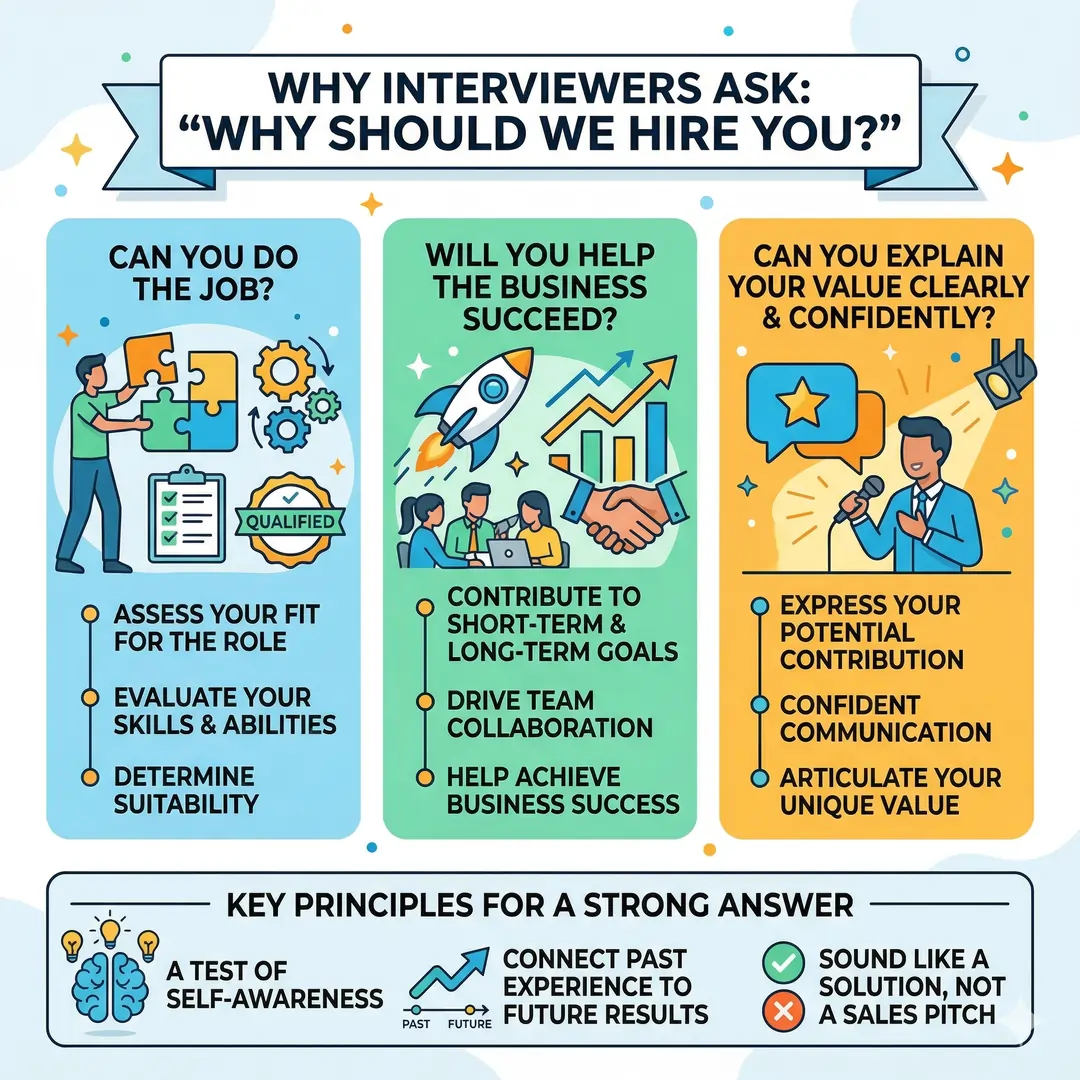
When an interviewer asks, “Why should we hire you?”, they are usually trying to learn three things. First, they want to know whether you can do the job. Second, they want to see whether you will help the team or business succeed. Third, they want to understand whether you can explain your value clearly and confidently. Indeed notes that employers use this question to assess your fit, your ability to succeed in the role, and how you might contribute to short-term and long-term goals. Harvard also states that interviewers want to know how clearly you can express your potential contribution.
This question is also a test of self-awareness. A strong candidate can connect experience to future results. HBR advises that the answer should speak directly to what the company needs, not just to what you want. In other words, your answer should sound like a solution, not a sales pitch.
The Best Way to Structure Your Answer
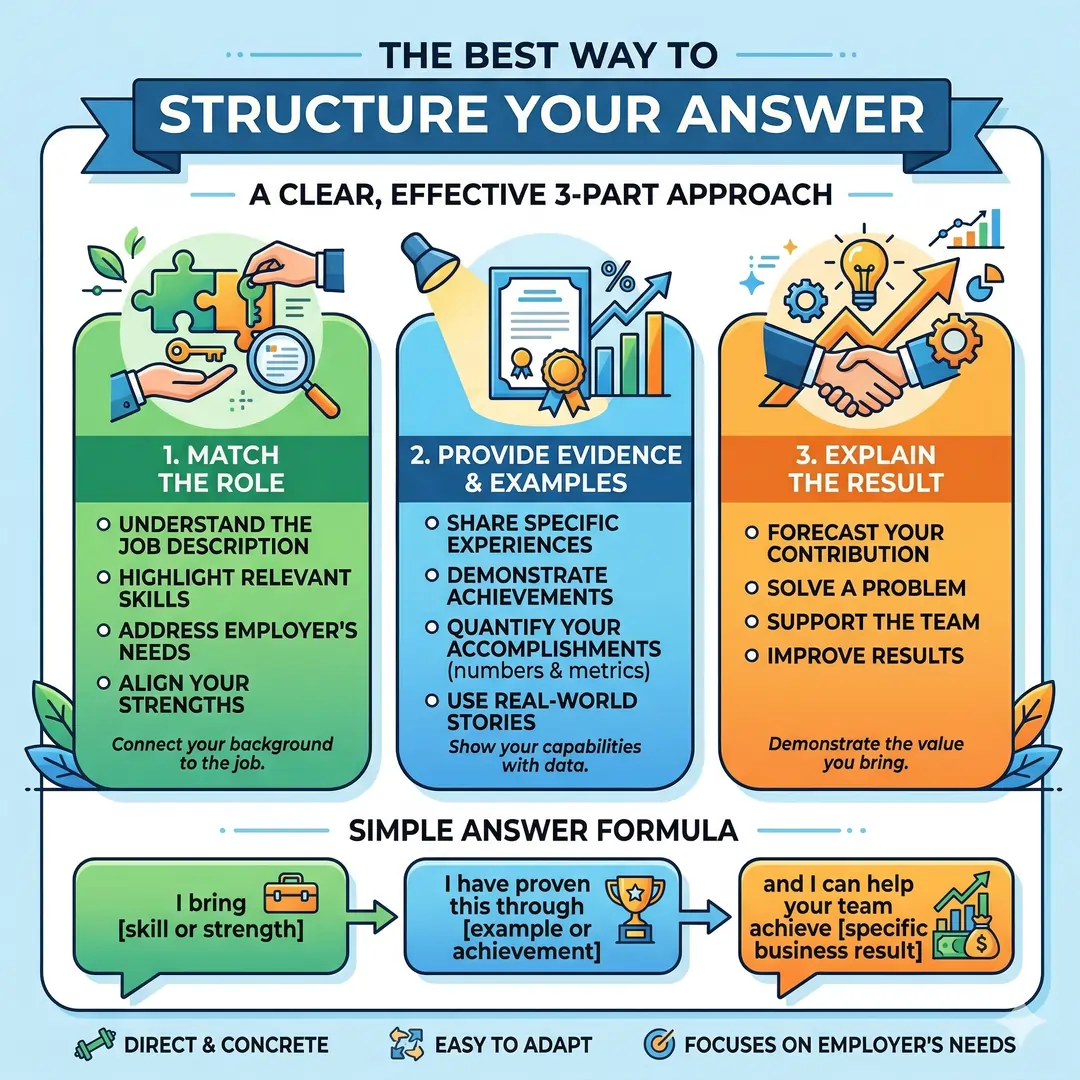
A clear structure keeps your answer focused and memorable. One of the most effective ways is to combine three parts:
- Match the role
- Show proof with examples
- Explain the result they can expect
This approach works because it answers the employer’s real concern. They are hiring someone to solve a problem, support a team, or improve results. If you can show that you understand the job and already have evidence that you can do similar work, your answer becomes much stronger. Harvard guidance suggests using specific experiences to show your strengths, while Indeed recommends connecting your background to the job posting and quantifying accomplishments.
A simple answer formula
You can use this formula in almost any interview:
“You should hire me because I bring [skill or strength], I have proven this through [example or achievement], and I can help your team achieve [specific business result].”
That formula works well because it is direct, concrete, and easy to adapt. It also keeps the focus on the employer’s needs, which HBR recommends as the core of a strong response.
What a Strong Answer Includes
A strong answer usually contains these elements:
- Relevant skills
- Real examples
- Quantifiable results
- Knowledge of the company
- Confidence without arrogance
- A clear connection to the role
Indeed highlights passion for the work, differentiated experience, unique skills, and the ability to elevate the team’s current capabilities. Harvard emphasizes transferable skills and specific experiences that show your strengths.
Table 1: What Interviewers Want vs What You Should Say
| What the interviewer wants to know | What your answer should communicate | Example phrase |
|---|---|---|
| Can you do the job? | Show relevant skills and experience | “I have handled similar responsibilities in my previous role.” |
| Will you help the team? | Show teamwork, communication, and problem-solving | “I work well with different teams and keep projects moving.” |
| Will you make an impact? | Show results and value | “My last project improved response time by 20%.” |
| Do you understand the company? | Show research and interest | “I noticed your focus on customer experience, which matches my background.” |
| Are you confident and prepared? | Show clarity and self-awareness | “I know what I bring and how I can contribute.” |
This kind of structure helps keep your response practical and professional. It also makes it easier for the interviewer to remember your key strengths.
How to Prepare Before the Interview
Good answers are built before the interview, not during it. Start by studying the job description carefully. Look for the most important skills, responsibilities, and results the company is asking for. Then match those needs with your own background. Indeed recommends studying the job posting, researching the company, tying your background to the role, and quantifying accomplishments. Harvard also recommends researching the company’s mission, culture, and valued skills.
Use this preparation checklist
- Identify the top 3 skills in the job description
- Pick 2 or 3 examples from your experience
- Add numbers where possible
- Learn something about the company’s mission and culture
- Practice saying your answer out loud
- Keep your response natural, not memorized
Harvard advises practicing your response and using specific experiences, while its AI guidance warns against memorizing a word-for-word script because you need to sound natural and adapt in the moment.
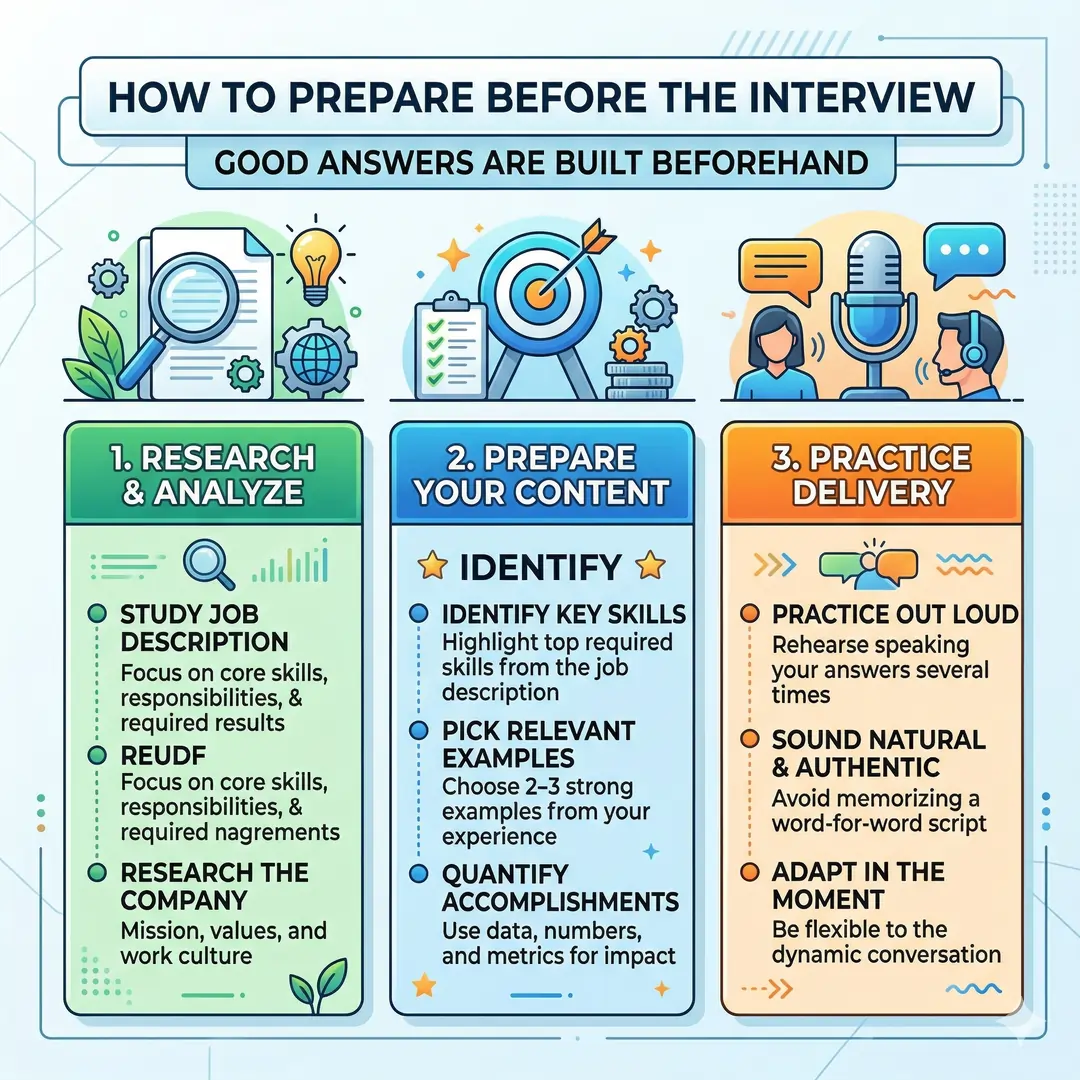
Table 2: How to Prepare Your Answer Step by Step
| Step | What to do | Why it matters |
|---|---|---|
| Read the job description | Find the top responsibilities and skills | Helps you answer what the employer actually needs |
| Research the company | Learn about mission, values, and culture | Helps you tailor your response |
| Choose your examples | Pick achievements that match the role | Makes your answer credible |
| Add numbers | Use metrics, percentages, timelines, or outcomes | Makes your answer stronger |
| Practice aloud | Rehearse naturally, not mechanically | Helps you sound confident |
| Refine your wording | Remove vague phrases and filler | Keeps the answer clear and sharp |
The Best Things to Mention in Your Answer
You do not need to list every skill you have. Instead, focus on the ones that are most relevant to the position. Strong answers often highlight technical skills, problem-solving, communication, leadership, adaptability, and teamwork. Harvard notes that interviewers often probe for decision-making skills and use the STAR method to understand how you handled a situation.
Use these value areas when building your answer
- Relevant experience that matches the role
- Transferable skills such as communication and collaboration
- Results that show real performance
- Learning ability if you are new to the field
- Motivation that connects to the company’s mission
- Professionalism and a strong work ethic
Indeed’s summary of strong responses includes passion for the work, proven abilities, unique skills, and the ability to elevate the team’s capabilities. That is a useful reminder that your answer should show both competence and contribution.
How to Use the STAR Method in Your Answer
The STAR method stands for Situation, Task, Action, and Result. Harvard career guidance specifically recommends using STAR when answering behavioral questions, and it notes that interviewers use it to understand how you made decisions and what steps you took.
You do not have to make your entire answer into STAR format, but you can use it inside your response to give one short example.
A simple STAR example
- Situation: My team was behind on a client project.
- Task: I needed to help improve the workflow and meet the deadline.
- Action: I reorganized the task list, coordinated with the team, and flagged blockers early.
- Result: We delivered the project on time and improved client satisfaction.
This method works because it shows action, judgment, and results instead of only vague claims. Harvard specifically notes that employers want a step-by-step account of how a decision was made and what result followed.
Sample Answers for Different Situations
Below are sample answers you can adapt to your own background. Each one is written in simple, natural language and can be adjusted to fit your experience.
1. For an experienced candidate
“You should hire me because I bring direct experience in this type of role, and I have a track record of producing results. In my last position, I managed projects that improved efficiency and helped the team meet deadlines more consistently. I also work well across departments, communicate clearly, and stay focused on quality. I believe I can bring that same level of reliability and value to your team.”
Why this works: It shows experience, results, teamwork, and confidence. It also aligns with the advice to connect your background to the employer’s needs.
2. For a fresher or entry-level candidate
“You should hire me because I may be early in my career, but I bring strong motivation, quick learning ability, and a solid foundation in the skills needed for this role. During my studies and internships, I learned how to work in teams, handle deadlines, and solve problems carefully. I am ready to learn quickly, take feedback well, and contribute from day one.”
Why this works: It does not pretend to have years of experience. Instead, it highlights transferable skills, attitude, and learning ability, which Harvard and Indeed both treat as valuable in interviews.
3. For someone changing careers
“You should hire me because I bring a fresh perspective along with skills that transfer well into this role. In my previous work, I built strong communication, organization, and problem-solving habits that are useful here too. I have taken time to study this field, learn its expectations, and prepare myself to contribute in a meaningful way. I believe that a combination of new perspective and transferable experience can be valuable to your team.”
Why this works: It explains the career change positively and connects prior experience to the new role. Harvard recommends focusing on how your strengths and goals align with the opportunity.
4. For a technical role
“You should hire me because I have the technical skills needed for this job and the habit of using them to solve real problems. I focus on clean execution, clear communication, and careful problem-solving. In past projects, I have worked through difficult tasks methodically, checked my work closely, and collaborated with others to deliver good results. I am confident I can bring both technical ability and reliability to your team.”
Why this works: Harvard notes that technical interviews often combine technical assessments with behavioral questions, so you need both skills and communication.
Table 3: Good Answer vs Weak Answer
| Weak answer | Why is it weak | Stronger answer |
|---|---|---|
| “I am a hard worker and a team player.” | Too generic and easy for anyone to say | “I helped my last team finish a delayed project early by organizing tasks and keeping communication clear.” |
| “I need this job and I really want the opportunity.” | Focuses too much on your needs | “I understand the challenges in this role and have experience solving similar problems.” |
| “I am better than other candidates.” | Sounds arrogant and unhelpful | “My background in this type of work, plus my results, make me ready to contribute quickly.” |
| “I can learn anything.” | Too broad and unsupported | “I learn quickly, and I have already adapted to new tools in previous roles.” |
| “I am very passionate.” | Passion alone is not enough | “I am passionate, and I can also show that passion through measurable results and consistent performance.” |
This table reflects a key lesson from the sources. Interviewers want clarity, proof, and connection to the role, not vague claims.
Common Mistakes to Avoid
Many candidates lose strength in this answer because they sound too generic, too rehearsed, or too self-centered. HBR warns against answers that are all about you without showing what the company gains. Harvard also encourages candidates not to memorize scripts word for word because they should sound natural and adaptive.
Avoid these mistakes
- Saying only “I am a hard worker.”
- Talking too much about what you want
- Giving no examples
- Overusing buzzwords
- Sounding arrogant
- Memorizing a speech that sounds robotic
- Ignoring the job description
- Failing to mention any result or impact
Indeed suggests quantifying your accomplishments and going above and beyond in your answer, which helps you avoid weak, generic statements.
How to Sound Confident Without Sounding Arrogant
This question often makes people nervous because they do not want to sound boastful. The key is to be confident in your value while staying grounded. Instead of saying, “I am the best candidate,” say something like, “My background matches the role well, and I can bring value quickly.” That sounds professional and calm. HBR’s guidance supports this balanced approach by emphasizing the match between your strengths and the employer’s needs.
A confident answer usually has three qualities:
- It is specific
- It is calm
- It is evidence-based
When you share evidence, the answer feels believable. When you stay calm, you sound trustworthy. When you tailor your answer, you sound prepared. Harvard’s guidance on interview preparation also encourages research and specific examples, which naturally support this style.
How to Customize Your Answer for the Company
Customization matters a lot. Employers can tell when a candidate has copied a generic response. The strongest answers connect your skills to the company’s goals, culture, or mission. Indeed recommends researching the company and linking your background to the job posting. Harvard also suggests learning about mission, culture, and the skills valued by the organization.
What to customize
- Industry language if the role uses specialized terms
- A Company values if the organization emphasizes a certain culture
- Team goals, if they are mentioned in the job ad
- Role priorities if the description focuses on a specific outcome
- Tone your answer so it matches the company environment
For example, if the company values customer service, mention how you support clients and solve problems calmly. If the company values innovation, mention how you improve processes or find better solutions. If the company values collaboration, it emphasizes teamwork and communication. This is exactly the kind of role-match thinking HBR recommends.
How to Answer If You Have Little Experience
If you are new to the workforce, the question can still be answered very well. You do not need decades of experience. You need proof of potential. That proof can come from internships, volunteering, school projects, part-time jobs, student leadership, freelancing, or personal projects. Harvard’s interview guidance stresses transferable skills and clear communication of your contribution, which is especially helpful for entry-level candidates.
Focus on these strengths
- Willingness to learn
- Reliability
- Communication
- Time management
- Problem-solving
- Adaptability
- Positive attitude
Indeed’s advice also supports this by highlighting passion, drive, unique skills, and a sense of connection to the team culture.
Entry-level example
“You should hire me because I bring a strong work ethic, a willingness to learn, and a good foundation in the skills needed for this role. During my academic work and projects, I learned how to manage deadlines, work with others, and stay organized. I am excited to apply that mindset in a professional setting and grow while contributing to your team.”
How to Answer If You Are Experienced
Experienced candidates should use the question to show depth. This is the place to highlight measurable outcomes, leadership, and advanced problem-solving. Harvard notes that hiring managers may use STAR probing to understand how you made decisions and what results you produced. Indeed, it also encourages quantifying accomplishments.
Experienced candidate example
“You should hire me because I have several years of experience handling the kind of work this role requires, and I have a history of improving results. I have led projects, solved operational problems, and helped teams work more efficiently. I also communicate well with different stakeholders, which helps keep work on track. I believe I can make a strong contribution quickly while also bringing steady, reliable performance over time.”
How to Answer If You Are Changing Industries
A career change can be a strength when explained well. You can show that your earlier experience gave you a broader perspective and useful transferable skills. Harvard’s interview guidance supports connecting your background and strengths to the opportunity, while its advice on research and specific examples helps you explain why the transition makes sense.
Career changer example
“You should hire me because I bring strong transferable skills and a serious commitment to this new field. My previous work taught me how to communicate clearly, solve problems, and stay organized under pressure. I have also taken time to study this industry and understand what success looks like here. That combination helps me bring fresh perspective and practical value to the role.”
A Simple Way to Practice Your Answer
Practice is important, but the goal is not to memorize every word. Harvard advises against word-for-word scripting and recommends keeping your response in your own voice. It also suggests using AI or other tools for ideas, then reviewing them critically and personally.
Practice in this order
- Write your draft answer
- Remove weak or vague language
- Add one specific example
- Add one result or a number if possible
- Read it aloud
- Record yourself and listen back
- Simplify until it sounds natural
This gives you a confident answer without making it sound artificial.
Table 4: Fill-in-the-Blank Answer Template
| Part | Template |
|---|---|
| Opening | “You should hire me because I bring [skill] and [experience] that match this role.” |
| Proof | “In my previous work, I [did something specific], which led to [result].” |
| Company fit | “I also see that your team values [company value or goal], which matches how I work.” |
| Closing | “I would love to bring that same approach to your team and help you achieve [goal].” |
Example using the template
“You should hire me because I bring strong communication and project coordination skills that match this role. In my previous job, I helped organize a process that improved team response time and reduced delays. I also see that your team values efficiency and service quality, which matches how I work. I would love to bring that same approach to your team and help you deliver strong results.”
What Not to Say
Some responses can quietly hurt your chances even if they sound polite. Avoid answers that center only on what you need from the job, what the company can give you, or why you are desperate for work. HBR makes it clear that the response should focus on why they need you, not why you need them.
Avoid phrases like these
- “I really need this job.”
- “I think I am okay for this role.”
- “I can do anything you need.”
- “I do not have much experience, but…”
- “I am just a hard worker.”
These statements are either too weak or too generic. Instead, say what you bring, how you have used it, and what result it produced. That is much more persuasive. Indeed’s guidance on quantifying accomplishments and showing unique value supports this approach.
Table 5: Strong Words and Phrases to Use
| Use more often | Why it helps |
|---|---|
| Relevant experience | Shows a direct connection to the role |
| Transferable skills | Helps entry-level and career changers |
| Quantifiable results | Makes your answer more credible |
| Problem-solving | Signals practical value |
| Collaboration | Shows you can work with others |
| Adaptability | Shows you can handle change |
| Leadership | Shows initiative and judgment |
| Contribution | Keeps the answer focused on the employer |
| Value | Make your answer employer-centered |
| Impact | Suggests you can produce results |
These terms are useful because they reflect what employers are trying to evaluate in the interview. Harvard and Indeed both emphasize contribution, professionalism, and fit.
Best Mindset to Have Before Answering
Think of this question as an invitation to help the interviewer picture you succeeding in the role. Harvard describes interviews as a way to assess fit, communication, professionalism, and whether the opportunity matches your skills and goals. That means your answer should help the interviewer imagine you doing the work well, not just hearing that you want the job.
A useful mindset is this:
“My job is to show that I understand the role, I can do the work, and I can make things better.”
That mindset naturally leads to stronger, more focused answers. It keeps you from rambling and helps you stay connected to the employer’s priorities. HBR’s emphasis on the match and Harvard’s emphasis on specific examples both support this approach.
Final Example Answer You Can Model
Here is a strong general-purpose sample you can adapt:
“You should hire me because I bring the right mix of relevant experience, strong communication, and a proven ability to solve problems. In my previous role, I handled responsibilities similar to this one and helped improve workflow by staying organized and working closely with the team. I also took time to learn about your company, and I appreciate your focus on quality and growth. I believe I can contribute quickly, learn fast, and add value to your team.”
This type of answer works because it is clear, specific, and focused on the employer’s needs. It follows the advice from Harvard, HBR, and Indeed by matching skills to the role, using a specific example, and showing value.
Conclusion
Answering “Why should we hire you?” becomes much easier when you stop thinking of it as a trick question and start thinking of it as a value question. The interviewer is trying to understand what you bring to the table, how well you match the role, and whether you can help the team succeed. Harvard, HBR, and Indeed all point toward the same core idea. Your answer should be tailored, specific, and centered on the employer’s needs.
The strongest responses are simple but powerful. They show relevant skills, real proof, and clear value. They sound natural, not memorized. They make the interviewer feel confident about your ability to contribute. Once you prepare a few examples and practice them aloud, this question becomes one of the best chances you have to stand out.
Also, Read these Articles in Detail
- Top Interview Questions and Answers Guide
- Interview Questions and Answers for Freshers and Experienced Candidates
- Common Interview Questions and Best Answers for Job Seekers
- “Tell me about yourself” Interview Answer Examples and Tips
- Strengths and Weaknesses Interview Questions and Sample Answers
- Behavioral Interview Questions and Answers Using the STAR Method
Article Reference and Sources
- Harvard FAS Mignone Center for Career Success.
Prepare for an Interview.
Available at: https://careerservices.fas.harvard.edu/channels/prepare-for-an-interview/ - Harvard FAS Mignone Center for Career Success.
General Tips for Virtual Career Fairs.
Available at: https://careerservices.fas.harvard.edu/resources/general-tips-for-virtual-career-fairs/ - Harvard FAS Mignone Center for Career Success.
AI for Interviews and Offers.
Available at: https://careerservices.fas.harvard.edu/ai-interviews-and-offers/ - Harvard FAS Mignone Center for Career Success.
What Are Decision-Making Skills?
Available at: https://careerservices.fas.harvard.edu/blog/2024/02/29/what-are-decision-making-skills/ - Harvard FAS Mignone Center for Career Success.
Technical Interviews.
Available at: https://careerservices.fas.harvard.edu/resources/technical-interviews/ - Indeed Career Guide.
Why Should We Hire You? Best Answers and Tips.
Available at: https://in.indeed.com/career-advice/interviewing/interview-question-why-should-we-hire-you - Harvard Business Review.
How to Answer “Why Should We Hire You?” in an Interview.
Available at: https://hbr.org/2024/11/how-to-answer-why-should-we-hire-you-in-an-interview - Harvard Business Review.
Nail Your Answer to “Why Should We Hire You?”
Available at: https://hbr.org/tip/2024/11/nail-your-answer-to-why-should-we-hire-you
Frequently Asked Questions
FAQ 1: What does the interview question “Why should we hire you?” really mean?
This question is your chance to show the employer that you understand the role and can bring real value to the team. It is not just about saying that you are hardworking or interested in the job. It is about proving that your skills, experience, and attitude match what the company needs. Interviewers use this question to see whether you can explain your strengths clearly and connect them to the job in a practical way.
A strong answer should show that you know what the company is looking for and that you can help solve its problems. That means your response should focus on relevant experience, measurable results, and fit for the role. When you answer in this way, you sound confident, prepared, and easy to trust.
FAQ 2: How should I structure my answer to “Why should we hire you?”
The best structure is usually very simple. Start by stating your main strength, then give a short example that proves it, and finally explain how that strength will help the company. A clear formula is: skill + proof + value. This keeps your answer focused and easy to remember.
For example, you might say that you have strong problem-solving skills, then mention a project where you solved a difficult issue, and then explain how that experience will help the new employer. This format works well because it does not sound vague or generic. It gives the interviewer a reason to believe that you can deliver results.
FAQ 3: What are the best things to mention in my answer?
You should mention the qualities that match the job description most closely. These can include relevant experience, technical knowledge, communication skills, teamwork, leadership, adaptability, and time management. If possible, add a result or achievement that shows how you used those strengths in real life.
It also helps to mention why you are a good fit for the company’s culture or goals. For example, if the company values customer service, talk about how you have helped customers or supported clients in the past. If the company values innovation, mention how you improved a process or found a better way to do something. The goal is to show value, not just list skills.
FAQ 4: How do I answer this question if I am a fresher or have little experience?
If you are new to the job market, do not worry. You do not need years of experience to give a strong answer. Instead, focus on your willingness to learn, strong work ethic, communication skills, and any experience from college, internships, projects, volunteer work, or part-time jobs. These all count as useful proof of your ability.
You can also talk about how quickly you learn and how seriously you take responsibility. A fresher can say something like, “I may be early in my career, but I bring energy, discipline, and a strong desire to grow.” This kind of answer works because it shows potential, confidence, and readiness to contribute.
FAQ 5: How can I answer this question if I am changing careers?
A career change can actually be a strength if you explain it well. The best way is to focus on the transferable skills you already have. These are skills from your previous work that still matter in the new role, such as communication, organization, leadership, problem-solving, or customer service. You should also show that you have taken time to learn about the new field.
Your answer should explain why your background is useful instead of making the change sound risky. For example, you might say that your previous work taught you how to manage pressure and work with teams, and those skills will help you succeed in the new role. This makes your transition sound thoughtful and professional.
FAQ 6: Should I use numbers or achievements in my answer?
Yes, whenever possible, you should include numbers, results, or specific achievements. This makes your answer much stronger because it gives the interviewer something concrete to remember. Instead of saying, “I improved performance,” you can say, “I helped improve performance by 20 percent.” That sounds more real and more convincing.
Numbers are especially useful because they show impact. They turn a general statement into proof. Even if you do not have major statistics, you can still mention clear outcomes such as finishing projects on time, improving teamwork, reducing errors, or helping a process run more smoothly. Any real result is better than a vague claim.
FAQ 7: What should I avoid saying when answering this question?
You should avoid answers that are too general, too nervous, or too focused on what you want instead of what the employer needs. For example, saying “I really need this job” or “I am a hard worker” does not tell the interviewer enough. These statements are common and do not prove that you are the best choice.
You should also avoid sounding arrogant. Saying that you are “better than everyone else” can create a bad impression. A much better approach is to stay confident but respectful. Focus on the facts, your strengths, and the value you can add. That keeps your answer professional and believable.
FAQ 8: How can I make my answer sound confident but not arrogant?
The key is to speak with calm confidence and use proof instead of exaggeration. You do not need to act like you are the perfect candidate. You only need to show that your skills, experience, and attitude make you a strong fit for the role. Confidence comes from preparation, not from bragging.
A good answer sounds honest and grounded. You might say, “My background matches this role well, and I have proven that I can handle similar responsibilities successfully.” That sounds strong without sounding boastful. When you use real examples and keep your tone natural, your confidence will come through positively.
FAQ 9: How do I customize my answer for different companies or roles?
Customization is one of the most important parts of a strong interview answer. You should always study the job description, learn about the company’s goals, and think about which of your strengths fit best. A generic answer can sound weak, but a tailored answer shows that you took time to prepare and understand the opportunity.
For example, if the company cares about teamwork, talk about your collaboration skills. If it values efficiency, mention how you help complete work on time and improve processes. If it focuses on customer satisfaction, talk about your experience helping people and solving problems. The more closely your answer matches the role, the more powerful it becomes.
FAQ 10: Can you give me a simple example of a strong answer?
Yes. A simple, strong answer might sound like this:
“You should hire me because I bring the right mix of experience, communication skills, and problem-solving ability for this role. In my previous work, I handled similar responsibilities and helped improve workflow by staying organized and working closely with the team. I also understand your focus on quality and growth, and I believe I can contribute quickly and add real value.”
This kind of answer works because it is clear, specific, and focused on the employer’s needs. It does not try too hard, and it does not sound fake. It simply shows that you understand the role, you have relevant strengths, and you are ready to help the company succeed.
